Monet’s Blurred Vision Saw More Clearly
Claude Monet, going blind in his later years, kept painting — and what he rendered wasn’t the world falling apart but, as poet Lisel Mueller saw it, a world revealing its hidden wholeness. Parker J. Palmer takes that image and turns it into something urgent: a meditation on what he calls “soft eyes,” the open, diffuse way of seeing that finds the vulnerable life beneath hard surfaces — in a frozen winter landscape, in another person’s armor, in a democracy under strain. Hard eyes, Palmer writes, are the narrowed eyes of fight-or-flight, laser-focused on threat. They keep us alive in moments of danger, but they cannot find what sustains us. “It takes soft eyes to look at another person and see behind their armor to the shy soul that’s yearning to be seen and heard.” The essay moves between Mueller’s poem, the interconnected root systems of trees, and the Beloved Community that Dr. Martin Luther King Jr. could only have glimpsed through soft eyes — a vision that required seeing possibility through rock-hard oppression. Palmer’s argument is neither naive nor merely poetic: he insists that how we look shapes what becomes possible, that perception is not passive but political, even spiritual. He closes with Monet’s own words from the poem — “how infinitely the heart expands / to claim this world” — as a kind of invitation to practice the finest work the human heart can do.
|
Be The Change
Choose one person today — a stranger, a colleague, someone who frustrates you — and spend sixty seconds genuinely trying to see what might be tender or scared behind whatever face they’re showing the world. Notice how your body changes when you look that way. |
 DailyGood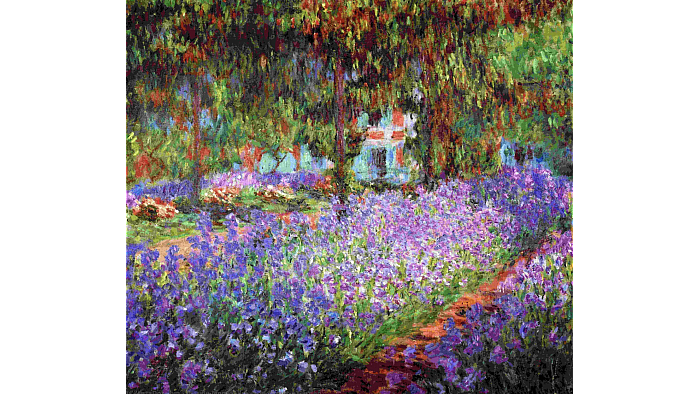





Leave a Reply