In association with hhdlstudycirclemontreal.org

Archive for July, 2026

One Word That Stopped a Theft

DailyGood: News That Inspires – Jul 31, 2026

DailyGood DailyGood

News That Inspires
Jul 31, 2026
One Word That Stopped a Theft
“A leader is best when people barely know he exists, when his work is done, his aim fulfilled, they will say: We did it ourselves.”

— Lao Tzu

One Word That Stopped a Theft

After midnight in an Israeli gas station, a young man deep in an ancient text looked up at a shoplifter and called him, without irony, a tzaddik, a “righteous one”. The thief stopped. Then came back. Then returned everything. Erez Levin’s story, told decades later, is not really about that midnight moment — it’s about what had to be true inside a person for such a word to come out naturally, and be believed. Tzaddik, in the Jewish tradition, names someone accurate in thought, speech, and deed — but it is also how parents address their children at the dinner table, a way of “labeling upward,” calling the soul toward what it might yet become. The deeper current running through Levin’s account is the relationship between inner preparation and spontaneous grace. The book he was reading shaped a word that emerged unbidden, like practice at the gym making the right move possible in the unrehearsed moment. Levin traces it all back further: to a humble soldier who consistently volunteered to take care of emergent new tasks and chores, to a friend who said “this is arrogance” with enough love to be heard, to family members who offer unconditional love. How we see and speak in unguarded moments is not so much incidental, but all the more reflective of the lens we carry through the inner work of each moment.

READ FULL STORY

Be The Change

In your conversations today, speak to the potential someone could be, not only who they are being right now.

Share this inspiration:

Email Twitter Facebook
More: 73 New Stories This Week!
DailyGood is a volunteer-run initiative that delivers “good news” to 138,723 subscribers. There are many ways to help. To unsubscribe, click here.

Other ServiceSpace projects include:

AwakinKindSpringKarmaTubeConversationsMore

ServiceSpace
Change Yourself, Change the World

The Birdwatchers

This week’s inspiring video: The Birdwatchers
Having trouble reading this mail? View it in your browser. Not interested anymore? Unsubscribe
KarmaTube.org

Video of the Week

Jul 30, 2026
The Birdwatchers

The Birdwatchers

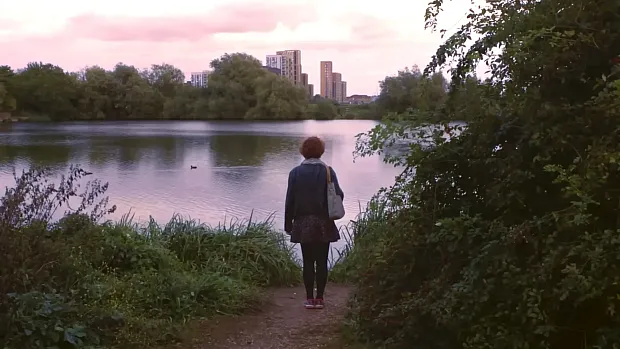
Four women who proudly identify themselves as birdwatchers challenge stereotypes of who spends time watching birds and why. As Carly Simon said, “The sound of birds stops the noise in my mind.”
Watch Video Now Share: Email Twitter FaceBook

Related KarmaTube Videos

Smile Big
Meditate
Live It Up
Serve All

Everybody Can Be Great, Martin Luther King, Jr.

Kindness Boomerang

Danny and Annie

Sound of Music Train Station

About KarmaTube:
KarmaTube is a collection of inspiring videos accompanied by simple actions every viewer can take. We invite you to get involved.
Other ServiceSpace Projects:

DailyGood // Conversations // iJourney // HelpOthers

MovedByLove // CF Sites // Karma Kitchen // More

Thank you for helping us spread the good. This newsletter now reaches 39,648 subscribers.

The Brain of a Beginner’s Mind

DailyGood: News That Inspires – Jul 30, 2026

DailyGood DailyGood

News That Inspires
Jul 30, 2026
The Brain of a Beginner's Mind
“In the beginner’s mind there are many possibilities, but in the expert’s there are few.”

— Shunryu Suzuki

The Brain of a Beginner’s Mind

When neuroscientist Karen Barrett scanned the brains of children improvising music for the first time, she expected to find something rudimentary. Instead, she found something revealing. The children’s brains lit up in reward centers more strongly than those of trained jazz musicians, suggesting that creativity isn’t a skill layered onto the brain through practice, but something closer to a birthright. Barrett describes the fMRI data as capturing “the beginner’s mind,” showing that the capacity to create exists before expertise, before confidence, before anyone has had the chance to talk themselves out of it. What quiets in the brain during improvisation — the self-judging dorsolateral prefrontal cortex — turns out to be the very thing that gets louder as people grow up and grow cautious. The science, in the end, points toward something most people already suspect but rarely trust: that getting out of one’s own way is not a failure of discipline, but an act of returning to something innate.

READ FULL STORY

Be The Change

Set a timer for five minutes and create something, just for the fun of it. Doodle, hum a melody, arrange objects on your desk into a pattern. And don’t erase or start over. As Barrett discovered, the brain’s reward centers light up during improvisation regardless of skill level, so the goal isn’t to make something good, but to notice how it feels to let something exist without correcting it.

Share this inspiration:

Email Twitter Facebook
More: 83 New Stories This Week!
DailyGood is a volunteer-run initiative that delivers “good news” to 138,735 subscribers. There are many ways to help. To unsubscribe, click here.

Other ServiceSpace projects include:

AwakinKindSpringKarmaTubeConversationsMore

ServiceSpace
Change Yourself, Change the World

How Discarded Plastic Bottles Are Saving Dolphins

DailyGood: News That Inspires – Jul 29, 2026

DailyGood DailyGood

News That Inspires
Jul 29, 2026
How Discarded Plastic Bottles Are Saving Dolphins
“It’s not what you look at that matters, it’s what you see.”

— Henry David Thoreau

How Discarded Plastic Bottles Are Saving Dolphins

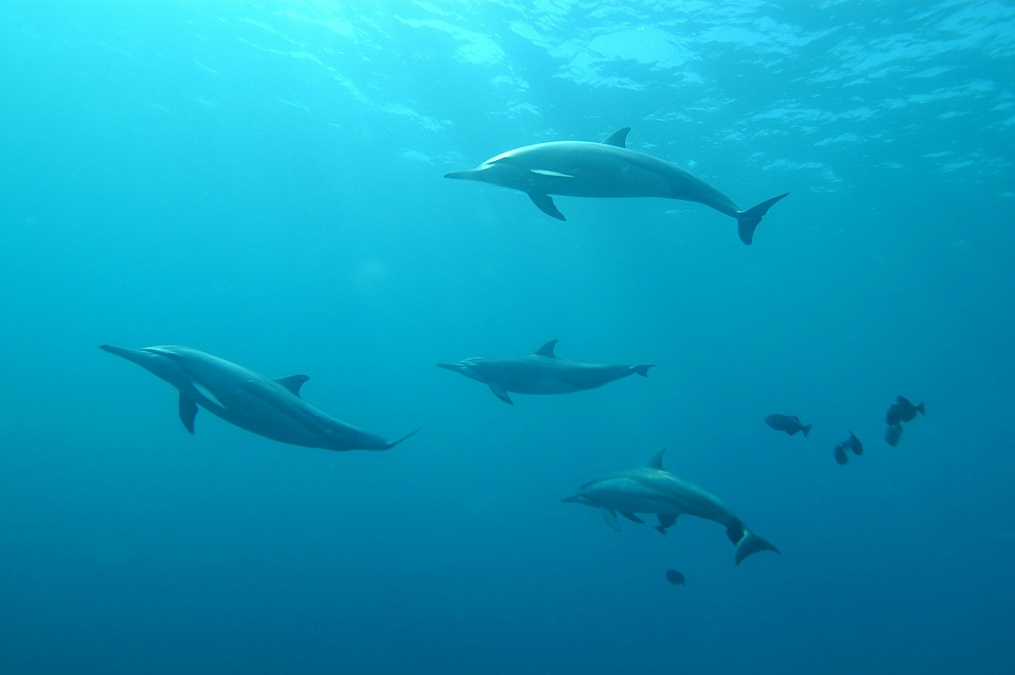
Off the coast of Brazil, something quietly ingenious is happening: fishers are zip-tying discarded plastic bottles to their gillnets, which allows dolphins that previously would have gotten caught in them to swim away unharmed. The logic is elegant: dolphins navigate by echolocation, and the air trapped inside a plastic bottle bounces their sonar signals back, making an otherwise invisible nylon net suddenly audible. In expanded trials spanning 318 fishing trips over five years, the technique reduced dolphin bycatch by 88%, while the fish catch stayed exactly the same. As lead researcher Per Berggren puts it, “This is genuinely recycling that rescues dolphins.” There was no expensive technology and no government subsidy required, just a material already polluting the ocean repurposed into a lifeline. The solution lives at the intersection of two problems: plastic waste and marine mammal mortality, and quietly dissolves both at once. Further trials are now underway in Cambodia and Congo, carried by the quiet momentum of an idea that works.

READ FULL STORY

Be The Change

Next time you finish a plastic bottle, pause before tossing it and look up one local waterway cleanup or marine conservation effort you can support or share — let the bottle remind you that waste and remedy are sometimes the same material.

Share this inspiration:

Email Twitter Facebook
More: 82 New Stories This Week!
DailyGood is a volunteer-run initiative that delivers “good news” to 138,738 subscribers. There are many ways to help. To unsubscribe, click here.

Other ServiceSpace projects include:

AwakinKindSpringKarmaTubeConversationsMore

ServiceSpace
Change Yourself, Change the World

The Amputees Farming in Sierra Leone

DailyGood: News That Inspires – Jul 28, 2026

DailyGood DailyGood

News That Inspires
Jul 28, 2026
The Amputees Farming in Sierra Leone
“There is no greater disability in society than the inability to see a person as more.”

— Robert M. Hensel

The Amputees Farming in Sierra Leone

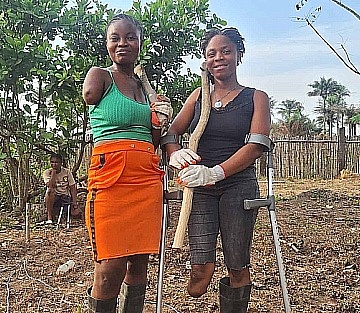
After Sierra Leone’s civil war left nearly 30,000 people without limbs and, too often, without dignity, pastor-turned-farmer Mambud Samai refused to accept that this was simply how things had to be. He has since taught over 100 amputees to grow food sustainably, turning smallholder plots into sources of income, community, and self-determination. One early participant, Mustapha Bockarie, who was once told by friends that he was a burden, now runs a community farm, raises goats, and keeps bees. His transformation is a quiet rebuke to every assumption made about what a person with limb loss can do. When a 2024 cohort of Samai’s initiative, Farming on Crutches, built a more accessible wheelbarrow from bamboo and bicycle wheels, participant Zainab Makieu offered a reminder that carries weight well beyond the farm: “disability is not inability.” What Samai has built is less a farming program and more evidence that when one person carries a skill back from the margins and places it in someone else’s hands, the reach of a single act of belief can travel far.

READ FULL STORY

Be The Change

Think of someone in your life who society might overlook — someone struggling, sidelined, or seen as a burden — and reach out to them today with a simple, genuine message of acknowledgment and real attention that says, “I see what you’re capable of.”

Share this inspiration:

Email Twitter Facebook
More: 80 New Stories This Week!
DailyGood is a volunteer-run initiative that delivers “good news” to 138,758 subscribers. There are many ways to help. To unsubscribe, click here.

Other ServiceSpace projects include:

AwakinKindSpringKarmaTubeConversationsMore

ServiceSpace
Change Yourself, Change the World

The Higher Teaching: Take A Vacation

Weekly excerpt to help us remember the sacred.

Awakin.org
Weekly Reading Jul 27, 2026

The Higher Teaching: Take A Vacation

–Jack Kornfield

Listen to Audio Translations RSVP for Awakin Circle
6a67f50aa1d87-2795.jpgA meditation student once went to the mountains, hoping to find silence. He rented a small cabin near a stream, thinking the sound of water would be soothing. At first, it was. The stream sang and shimmered over the rocks, and he sat down to meditate with great expectation.

But soon his mind began to interfere. Instead of hearing the stream as simple water, he heard patterns. The sounds became a tune. The tune became annoying. Before long, the stream sounded to him like a marching band that would not stop playing.

He tried to ignore it. He tried to meditate through it. But irritation grew. Finally, he got up, walked into the stream, and began moving the rocks. If the water flowed differently, he thought, surely the sound would change. Surely then he could meditate.

For a while, it seemed to work. Then another rhythm appeared. Again, the sound became unbearable. Again, he moved the rocks. This went on until he realized something both simple and humbling: the problem was not the stream. The problem was the mind that could not leave the stream alone.

So much of spiritual life begins this way. We believe peace will come when the conditions are rearranged. If the room were quieter, if the people around us were kinder, if our work were less demanding, if our bodies were less troublesome, if our families were more understanding — then we could be free.

Of course, outer conditions matter. There are times to fix what can be fixed, to protect what needs protection, to make wise changes. But there is also a deeper training: to see how often we keep moving the rocks because we do not know how to sit beside the stream.

Practice asks a different question. Not “How do I make life finally stop disturbing me?” but “Can I meet this moment without making war against it?” The dripping faucet, the crying child, the ache in the body, the person who does not behave as we wish — each reveals the same possibility.

Freedom is not found by perfecting the sound of the stream. It is found when the heart stops demanding that the stream sound different before it can be at peace.

FB TW IN
How do you relate to the notion that so much of our spiritual seeking is really a kind of “moving the rocks” – endlessly rearranging the outer conditions of our lives in the quiet hope that peace will finally arrive once everything sounds right? Can you share a personal story of a time when you kept trying to fix or change something outside yourself, only to discover that the real restlessness was living much closer to home? What helps you practice meeting a moment without making war against it – whether it’s a dripping faucet, a difficult person, or some small irritation that keeps playing like a tune you can’t unhear?

Add A Reflection

Awakin Archives

History

1,488

Awakin Readings

708

Awakin Interviews

101

Local Circles

Inspiring Links of the Week

Join: Interview with Janice Sullivan
Good:
Watch: Love Your Life: An Illustrated Interview with Maurice Sendak
Good:
Read: How My Life Changed While Waiting Out Traffic
Good:
More: ServiceSpace News
ss_logo.png

About Awakin

Many moons ago, a couple friends got together to sit in silence for an hour, and share personal aha-moments. The ripples of that simple practice have now spread to millions over 20+ years, through local circles, weekly podcasts and more.

Join Community
To get involved, join ServiceSpace or subscribe to other newsletters.
Subscribe to this Awakin newsletter
Don’t want these emails?

Unsubscribe from this email

The Delivery Rider Who Wrote 6,000 Poems

DailyGood: News That Inspires – Jul 27, 2026

DailyGood DailyGood

News That Inspires
Jul 27, 2026
The Delivery Rider Who Wrote 6,000 Poems
“Genuine poetry can communicate before it is understood.”

— T. S. Eliot

The Delivery Rider Who Wrote 6,000 Poems

He squeezes poems from the same hours as his deliveries. Wang Jibing rides through the streets of Kunshan, China with food orders strapped to his back and verses forming in his mind — and this year, he won China’s Lu Xun Literary Prize, one of the country’s highest literary honors. His collection, Low Flight, was built from the ground up: over 140 interviews with fellow delivery riders, 60 questionnaires, and a poet’s attention trained on people the literary world rarely notices. The title poem opens with a quiet manifesto: “Who says spreading your wings means you have to fly high?” Wang dropped out of school as a teenager, worked construction, scavenged waste, and never stopped reading. He has now published three collections and plans to keep working as a delivery rider for three more years; as he puts it, he loves the vibe and it keeps him fit. There is something clarifying about a man who wins a major prize and says the award will never change who he is. Wang’s work belongs to a growing movement of blue-collar writers in China reclaiming their own stories — and his hope is simple: that readers will offer delivery riders a little more patience the next time a knock comes at the door.

READ FULL STORY

Be The Change

The next time a delivery driver, sanitation worker, or service employee crosses your path, pause long enough to make genuine eye contact and offer a word of thanks for their unsung efforts.

Share this inspiration:

Email Twitter Facebook
More: 82 New Stories This Week!
DailyGood is a volunteer-run initiative that delivers “good news” to 138,748 subscribers. There are many ways to help. To unsubscribe, click here.

Other ServiceSpace projects include:

AwakinKindSpringKarmaTubeConversationsMore

ServiceSpace
Change Yourself, Change the World

This Month’s Stories …

DailyGood: News That Inspires – Jul 26, 2026

DailyGood DailyGood

News That Inspires
Jul 26, 2026
Weekly Digest
“The journey of a thousand miles begins with a single step.”

— Lao Tzu

This Month’s DailyGood Digest

This month’s roundup of stories highlight the power of small, dedicated acts of presence.

We delved into an array of experiences that mirror the human potential for inspiring possibility and compassion. Two scientists researching human flourishing around the world reminded us that small gestures weave a kinder society. Influencer Claudia Chee’s reflects on how wandering the aisles of a wholesale store led to unexpected transformation, while Scott Levine unfolded a tale of a near-fatal bike accident sparked a journey to love. In the world too small for us to see, the unsung dedication of two researchers on opposite sides of the planet led to a groundbreaking discovery. Meanwhile, a poet and nonprofit founder found hope, not despair, in the poetry of young voices. Relatedly, author Mandy Len Catron reflects on the practice of creative writing in an AI world. Storyteller Brian Conroy taught us the art of getting out of the way to let life flow, while filmmaker Nic Askew delved into the essence of storytelling, revealing its origin point and its role in our evolution. Shoukei Matsumoto pondered the enduring nature of capitalism in a reflection on “the circle that will not close” as Nguyễn Phương Lam shared reflections from two decades of contemplative practice, envisioning a new age for humanity. A social worker in India shares how, even in moments of loss, we are never truly alone, as illustrated through her poignant hospital visit with a late stranger. Finally, one woman’s touching essay on how she chose to forgive the man responsible for her brother’s death reminds us of the infinite capacity of compassion. Each story, a step in the journey toward understanding and transformation.

READ MORE STORIES (82 New!)

Join The Community

If you enjoy good news stories and want to help change the media landscape, join our volunteer team to curate, edit, spread the good! Login and get started.

DailyGood is a volunteer-run initiative that delivers “good news” to 138,748 subscribers. There are many ways to help. To unsubscribe, click here.

Other ServiceSpace projects include:

AwakinKindSpringKarmaTubeConversationsMore

ServiceSpace
Change Yourself, Change the World

A Fellow Diner’s Quiet Noticing

DailyGood: News That Inspires – Jul 26, 2026

DailyGood DailyGood
News That Inspires
Jul 26, 2026
A Fellow Diner's Quiet Noticing
“Kindness begins with the understanding that we all struggle.”

— Charles Glassman

A Fellow Diner’s Quiet Noticing

Allen Renfrey had lost his wife in 2020 and his son in 2021. A few years on, he was living alone in a retirement complex. One night, he dined at a Vietnamese restaurant that he and his wife used to frequent, ordering his usual rice paper rolls. It happened to be Father’s Day. After he finished and went to pay, the woman at the counter told him his meal was already taken care of; a couple who had just left had quietly covered his bill. Knowing nothing of Renfrey’s losses, they simply had noted it was not fair that a man had to sit alone, on Father’s Day. He searched the car park, hoping to find them, to say something — but they were gone. “When I got to my car,” he noted, “I sat inside and had a good weep.” There are acts of kindness so precisely timed they feel less like coincidence than grace — a stranger’s quiet noticing arriving exactly when a person most needs to be seen.

READ FULL STORY

Be The Change

The next time you’re in a restaurant or café, look around once — really look — and if you notice someone who seems to be carrying something heavy, consider quietly covering their bill before you leave.

Share this inspiration:

Email Twitter Facebook
More: 78 New Stories This Week!
DailyGood is a volunteer-run initiative that delivers “good news” to 138,753 subscribers. There are many ways to help. To unsubscribe, click here.

Other ServiceSpace projects include:

AwakinKindSpringKarmaTubeConversationsMore

ServiceSpace
Change Yourself, Change the World

The Edible City Where Food Is Free

DailyGood: News That Inspires – Jul 25, 2026

DailyGood DailyGood
News That Inspires
Jul 25, 2026
The Edible City Where Food Is Free
“The soil is the great connector of our lives, the source and destination of all.”

— Wendell Berry

The Edible City Where Food Is Free

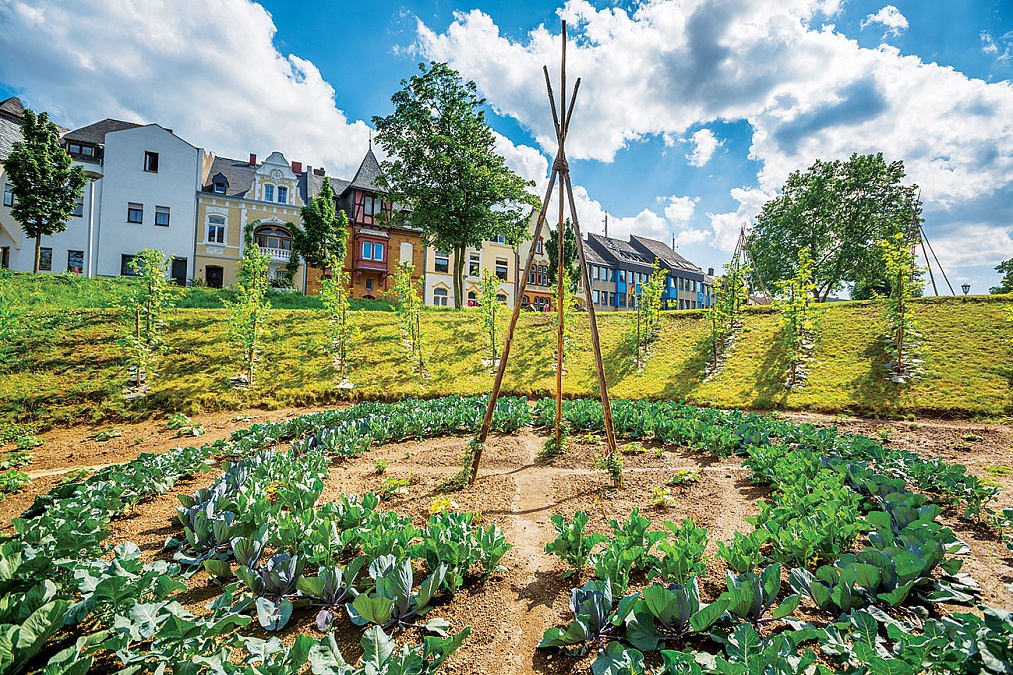
In the small German town of Andernach am Rhein, signs once said, “Keep Off The Grass.” Today, they read, “Picking Allowed.” Since 2010, the town has been replacing unused green spaces and ornamental plantings with edible gardens — tomatoes climbing castle walls, herbs in raised beds along roundabouts, fig and quince trees threading through medieval stonework. What began as a biodiversity experiment featuring 101 tomato varieties has grown into something harder to categorize: part urban farm, part social experiment, part quiet reimagining of what public space is for. A traffic-light card system tells passersby when vegetables are ripe, teaching children and adults alike to read the slow language of growing things. Long-term unemployed residents tend many of the plots through a local social enterprise, folding livelihood and dignity into the same soil as the cabbages. As the project’s initiator, Lutz Kosack, describes, the goal is that public spaces should be “fragrant and tasty and bring people together” — and the early skeptics who feared immediate plundering found instead that neighbors started swapping recipes and talking to each other. Andernach offers no grand manifesto, just tomatoes where you least expected them and the small revolutions that follow.

READ FULL STORY

Be The Change

Walk or drive a familiar route in your neighborhood and notice one patch of unused green space — a median, a parking strip, a vacant lot. Spend five minutes imagining what it might grow, then look up whether your city has a community garden program or urban agriculture initiative you could support or join.

Share this inspiration:

Email Twitter Facebook
More: 79 New Stories This Week!
DailyGood is a volunteer-run initiative that delivers “good news” to 138,755 subscribers. There are many ways to help. To unsubscribe, click here.

Other ServiceSpace projects include:

AwakinKindSpringKarmaTubeConversationsMore

ServiceSpace
Change Yourself, Change the World

Design a site like this with WordPress.com
Get started