 For many years my walks have taken me down an old fencerow in a wooded hollow on what was once my grandfather’s farm. A battered galvanized bucket is hanging on a fence post near the head of the hollow, and I never go by it without stopping to look inside. For what is going on in that bucket is the most momentous thing I know, the greatest miracle that I have ever heard of: it is making earth. For many years my walks have taken me down an old fencerow in a wooded hollow on what was once my grandfather’s farm. A battered galvanized bucket is hanging on a fence post near the head of the hollow, and I never go by it without stopping to look inside. For what is going on in that bucket is the most momentous thing I know, the greatest miracle that I have ever heard of: it is making earth.
The old bucket has hung there through many autumns, and the leaves have fallen around it and some have fallen into it. Rain and snow have fallen into it, and the fallen leaves have held the moisture and so have rotted. Nuts have fallen into it, or been carried into it by squirrels; mice and squirrels have eaten the meat of the nuts and left the shells; they and other animals have left their droppings; insects have flown into the bucket and died and decayed; birds have scratched in it and left their droppings or perhaps a feather or two.
This slow work of growth and death, gravity and decay, which is the chief work of the world, has by now produced in the bottom of the bucket several inches of black humus. I look into that bucket with fascination because I am a farmer of sorts and an artist of sorts, and I recognize there an artistry and a farming far superior to mine, or to that of any human. I have seen the same process at work on the tops of boulders in a forest, and it has been at work immemorially over most of the land surface of the world. All creatures die into it, and they live by it.
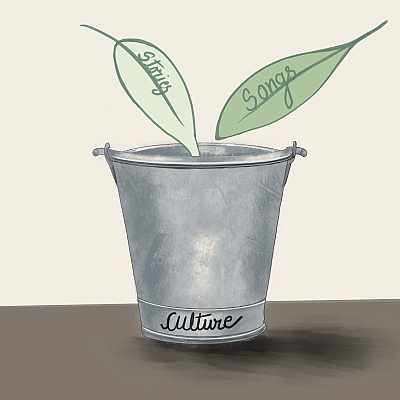
However small a landmark the old bucket is, it is not trivial. It is one of the signs by which I know my country and myself. And to me it is irresistibly suggestive in the way it collects leaves and other woodland sheddings as they fall through time. It collects stories, too, as they fall through time. It is irresistibly metaphorical.
It is doing in a passive way what a human community must do actively and thoughtfully. A human community, too, must collect leaves and stories, and turn them to account. It must build soil, and build that memory of itself—in lore and story and song—that will be its culture. These two kinds of accumulation, of local soil and local culture, are intimately related. |







Leave a Reply