The Hardest Word on the Card
AI may perfect our systems. It still can’t sign the card for us. |
|
| In 1963, if you wanted to march in Birmingham, Alabama, you had to sign a card. Ten promises. The first: pray every day. The eighth: no violence of the fist, the tongue, or the heart.
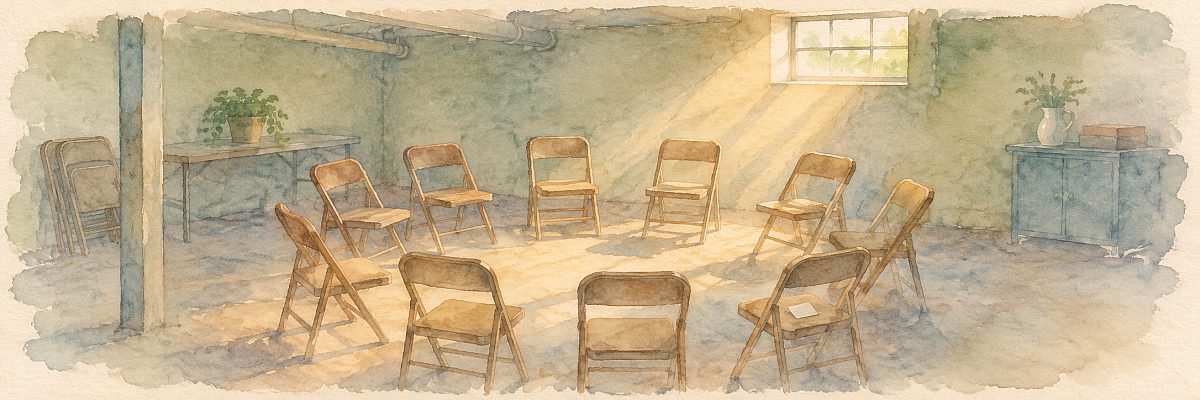
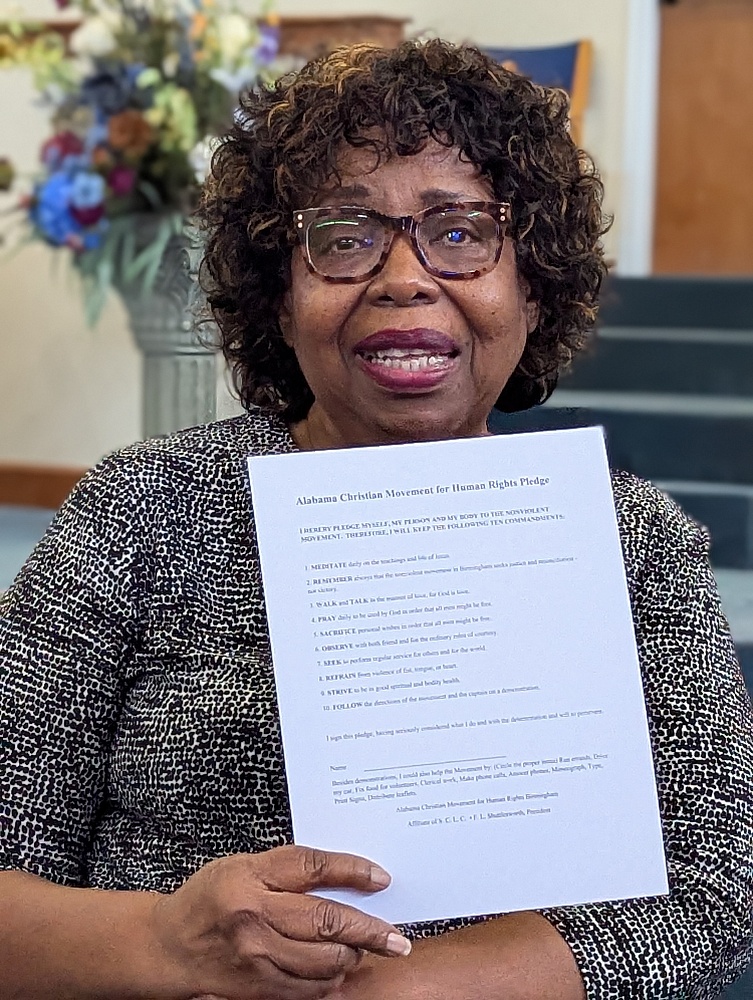 Last month, a few of us sat in a church basement in Birmingham with Rev. Thomas Wilder, who has led Bethel Baptist since 1988. We asked him which promise was hardest. Not the fist, he said. Not the tongue. The heart. No one could make that choice for you, and no one could see whether you had. What a community could do was help you become someone capable of making it. That’s what the workshops and the singing in those basements were for.
He told us about the pastor who built that community. In 1957, Fred Shuttlesworth tried to enroll his daughters in an all-white high school. A mob attacked him, and he ended up in the hospital. When a reporter asked what he was fighting for, he said: for the day the man who attacked him could sit down with his family as a friend. That week his church was packed and angry. Shuttlesworth, still bandaged, asked how many people were angry. Everyone shouted. Then he asked how many had been hurt. Silence. If the man who was hurt isn’t angry, he said, then you can find peace too.
That’s unusual. Robert Sapolsky, a neuroscientist, has spent thirty years studying stress. A zebra outruns a lion and goes back to eating grass. We outrun the lion and lie awake at 3 a.m. replaying it. Shuttlesworth had every reason to be angry. Yet he wasn’t letting anger decide what happened next. He had been practicing for years before that night arrived.
The poet T. S. Eliot once warned that people dream of systems so perfect that no one would need to be good. Birmingham organized carpools, phone trees, and march routes with amazing precision, but then asked every person to *be* good. Today we are building systems capable of doing things that once seemed uniquely human. They may even bring us closer to Eliot’s dream. But they cannot sign the card for us.
Not many of us will face a fire hose. Yet all of us live inside a design built to keep us on edge: the feed, the inbox, the buzz on the wrist. We’ve gotten very good at grabbing attention, and not very good at building rooms where compassion can grow.
Which brings us to this month’s invitation: a kind of basement workshop, for the mind. |
| 7-Day Pod • Nov 14–21 • Offered as a Gift |
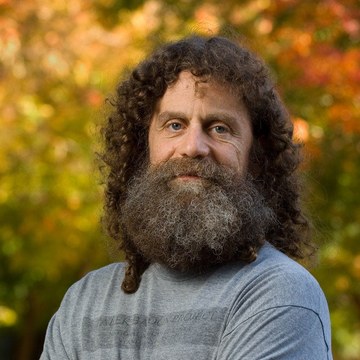 Why do we stay stressed in a world that won’t slow down — and what, in the body and the mind, actually settles? A new voice each day: Robert Sapolsky; Laurie Santos, whose course on why we get happiness wrong became the most popular in Yale’s history; Mingyur Rinpoche, who met childhood panic with meditation; Martin Picard, who traces stress from the mind down into our cells; Sharon Salzberg, fifty years into teaching lovingkindness as a skill, not a mood; and Judson Brewer, who found that anxiety runs on the same loop as addiction. Holding the week: Richie Davidson and Cortland Dahl of Dharma Lab.
It isn’t a course. Six daily explorations — a short teaching, a few minutes of practice, one small experiment to try in ordinary life, and then reading what a stranger in Nairobi or Lima noticed — with a live circle opening and closing the week together. More than a thousand people from 63 countries have already said yes; thirty-some volunteers holding the field.
We open together, live, on Saturday, Nov 14 (5:30 PM Pacific / Sunday 7 AM India) — recorded, if the hour doesn’t suit your timezone. |
A Generous Circle Isn’t Yet a Generous Room
Decades of Awakin Circles and Moved by Love retreats teach us one thing clearly: a group of generous people doesn’t automatically become a generous group. Generosity can be an individual virtue; a generous room is something that emerges between us. No platform can manufacture it. But technology might help create the conditions in which it becomes possible — and then get out of the way.
Pods now speak your language. The interface, the curriculum and everyone’s reflections appear in whatever language you read; you reply in yours and they read it in theirs. The translation disappears. The meeting remains.
Circle Agent is leaving the house. 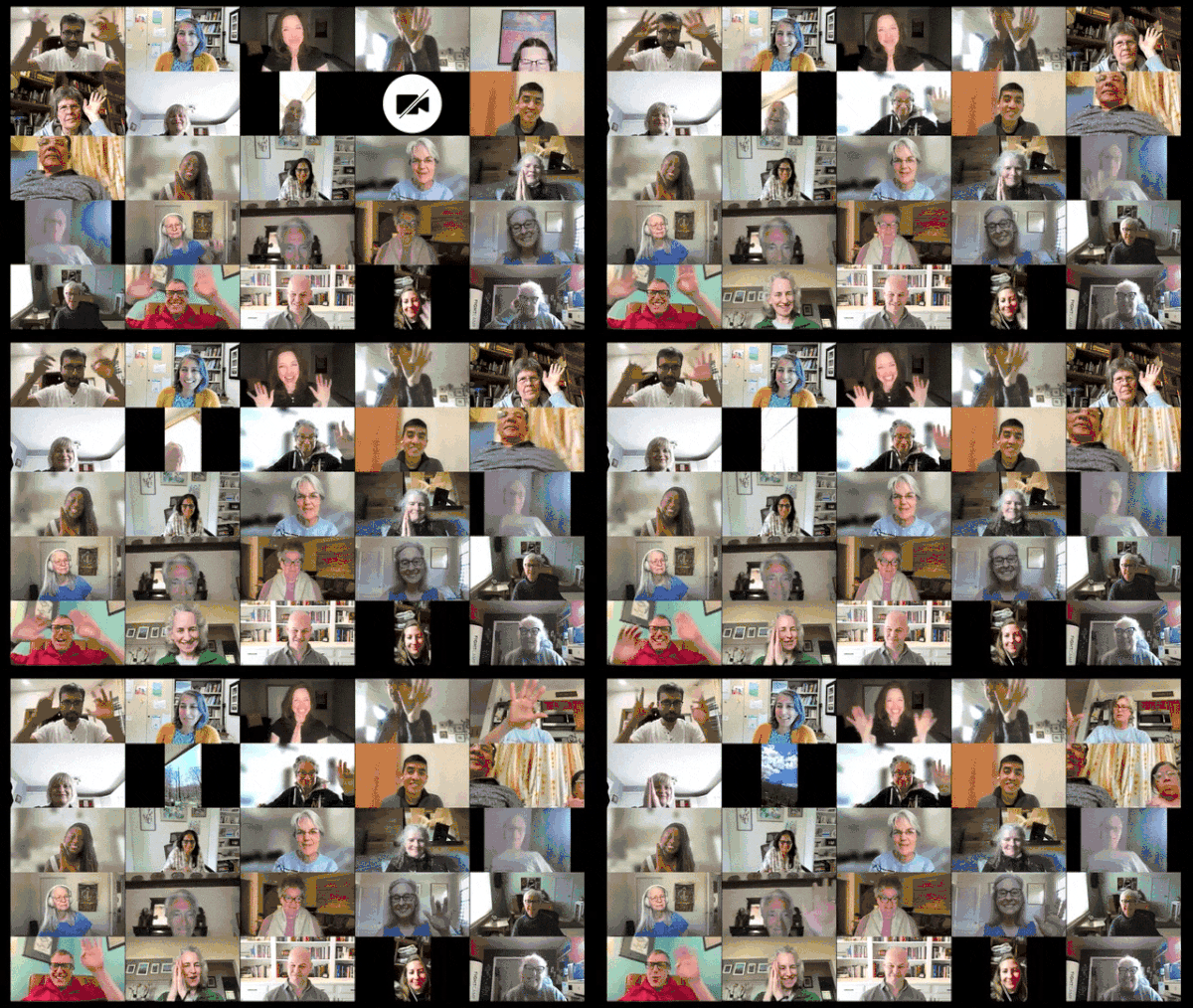 Instead of broadcasting a message to 7,000 people, what if you created a thousand circles of seven? The potential is hard to beat; so are the logistics. Circle Agent runs a 48-step workflow to bring strangers into three small-group conversations. The hope isn’t simply that people connect, but that they find relationships that no longer need the platform to sustain them. After two rounds inside ServiceSpace, it’s now being piloted with partner communities. The whole design is the leaving. Markets are good at rewarding platforms that grow; they’re far less practiced at rewarding platforms that make themselves unnecessary.
The Shunya Fellowship has begun. Fourteen fellows from eight countries, each with unique projects, one year: a weekly pod this fall, a month in India in December, nine months of building. True to its name (shunya: emptiness), the fellowship forms people who don’t need to be at the center — who use AI to help humans cohere, and then trust that coherence to lead.
Retreats. 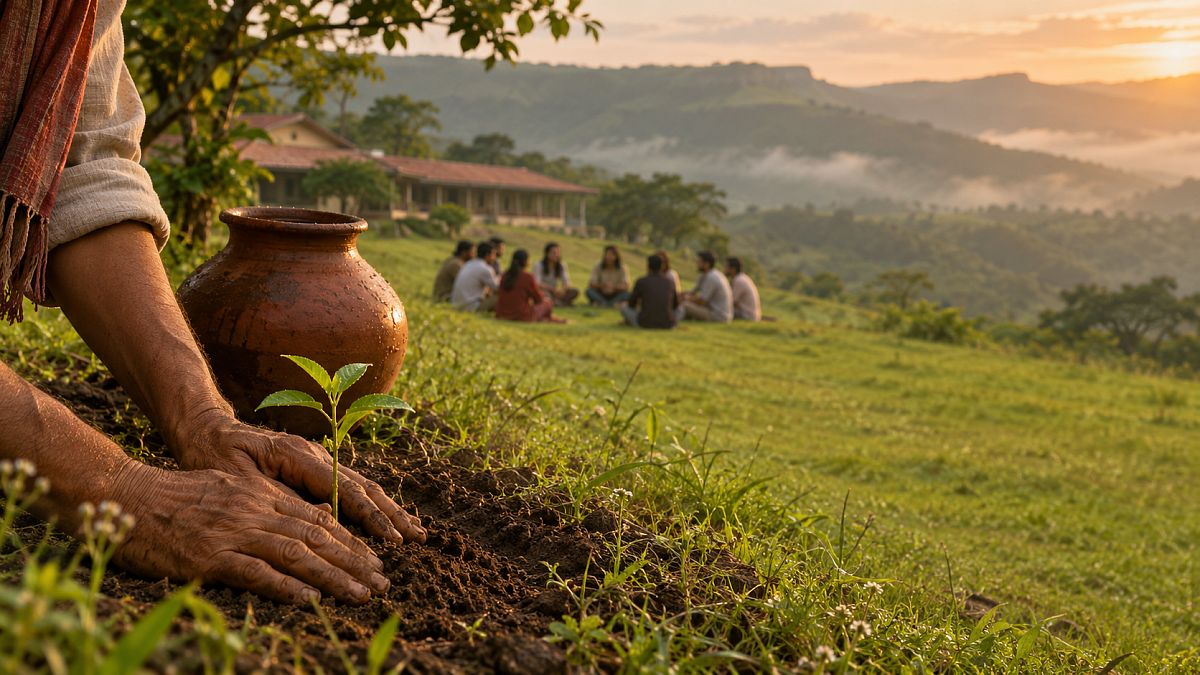 The Spirit of Service retreat outside Ahmedabad (Dec 3–6, now full) gathers changemakers from eight countries with Sister Lucy and Jayeshbhai. AI + Wisdom at FLAME University (Dec 24–27, applications open) holds two questions: when answers become free, what becomes precious? And what would you refuse to automate — in your work, your community, yourself? And fifteen people will live inside Vinoba’s ashram at Pavnar (Jan 8–14), where a community of women has lived by prayer, farm work and consensus since 1959, to ask what comes next for spaces that keep the sacred at the center. Could it be an ashram without walls?
For the first time, we’re hosting a month-long Winter Immersion for international guests, weaving in the Shunya Fellows. Then, in late January, Gandhi 3.0 brings forty-some changemakers from a dozen countries together for ten days — alongside a new Gandhi Immersion (Jan 29–31) open to changemakers across India. In all, more than fifty gatherings across a dozen cities, none with a price tag, held by more than two hundred volunteers practicing the quiet art of laddership: tend the conditions, then dissolve into what emerges.
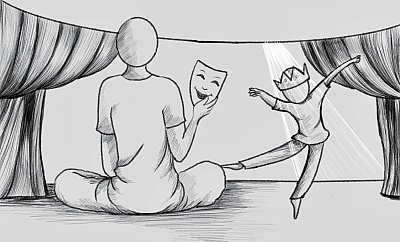
Every one of these is a basement workshop of sorts — a place to practice the hardest word on the card, together. The race, we’re told, is to artificial superintelligence. Our wager is on collective heart intelligence. One can be won. The other can only be grown.
At our retreat in the Badlands this fall, two men who likely don’t vote the same way shared a coffee break. One told the other he saw a child’s innocence in his eyes. The man lit up: his five-year-old is non-verbal, and the two of them say I love you through their eyes. His views didn’t disappear. They just stopped being the whole story. Nothing in that exchange was scripted. No system could have guaranteed it. But a community can tend the conditions that make such moments more likely.
So one question to carry into the winter: when our systems step aside, what becomes possible between us? 🙏 |
|
| Voices passing through the Story Booth — some just told, some about to be. |
| 🚗 THE SACRED ACCIDENT
On his daughter’s tenth birthday, Matthias crashed his car into a stranger’s. Instead of the shouting match that usually follows, he walked over and hugged him. The hour after, he says, taught him more about being than any book. |
| 🎪 SOUL CARNIVAL
At a premier business school in India, Gaurav turned the student carnival — food, games, stalls — into a pay-forward festival. Third year running. Future managers, learning what a price tag hides. |
| 🙏 TWO ROADS OUT OF POLAND
Mikołaj, abbot of a Zen community in Warsaw, once drove Thich Nhat Hanh across Poland; he’s now dreaming up a retreat on Polish soil. And Jin Wei, after a fun but hollow bohemian decade, stumbled on a Polish translation of the Sixth Patriarch Sutra — and is now a monk co-stewarding Redwood Vihara monastery. |
| 🕊 TWO YOUNG PEACEBUILDERS
Shakhzoda, in Tajikistan, is building a SafeVoice line for families; Nyakangba, in South Sudan, is helping young people silenced by conflict find their voices again. |
| 🪑 DRIVEWAY DIALOGUES
Every other Thursday, Prakash sets camping chairs in a circle on his driveway and the neighbors dialogue — about trust, about loving the person next door. |
| 🌿 STILL RIPPLING
A few days after forty strangers left the Badlands, Leoncarlo was playing violin at a farmers market in Fargo. Someone asked what he charged. “I’m here in love. No payment.” Rick, seventy-eight, has started making earth mandalas in his Illinois town — creek stones, foxtail, a marigold, gone by noon. |
| 💌 SIMPLY TRUE KINDLY
After a long relationship ended, Chanaka began posting small words of encouragement while finding his own way forward. Strangers around the world wrote back that they had given them hope. From that seed grew True Kindly, a circle where people give encouragement, seek support and celebrate the good. (Nov 10) |
| 🔗 THE POWER OF CIRCLES
Sally Mahe, a founding member of the United Religions Initiative, has spent decades holding cooperation circles across faiths and continents. She steps into the booth to reflect on what she calls the heart of democracy. (Nov 11) |
| ⚓ AT NINETY-SEVEN
Edmund Benson joined the Merchant Marines at sixteen, retired at fifty-two, and has spent his “retirement” teaching life skills to at-risk youth and elders. (Nov 13) |
| 📷 EVERYONE IS GOOD AT SOMETHING
Vicky Roy grew up on the streets of Delhi and found a camera. He now photographs people the world sees through the narrow frame of disability — and shows us the fullness of who they are. (Nov 29) |
|
| ServiceSpace incubates volunteer-run projects that nurture a culture of generosity and uplift the spiritual commons. Such small acts of service unlock an inner transformation that sustains external impact. |
|
|

 DailyGood