In association with hhdlstudycirclemontreal.org

Archive for the ‘Uncategorized’ Category

Kiran Khalap: Navigating Business, Creativity and Spirituality

You’re receiving this email because you are a DailyGood subscriber.
Trouble Viewing? On a mobile? Just click here. Not interested anymore? Unsubscribe.
DailyGood News That Inspires

September 25, 2020

a project of ServiceSpace

Kiran Khalap: Navigating Business, Creativity and Spirituality

This is the real secret of life — to be completely engaged with what you are doing in the here and now. And instead of calling it work, realize it is play.

– Alan Watts –

Kiran Khalap: Navigating Business, Creativity and Spirituality

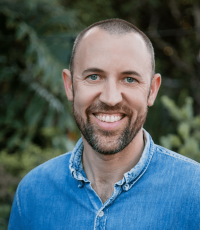
Where do business and spirituality meet? How does one use creativity to unite? How might we walk our unique path in solving problems outside and dissolving the ego inside? A weekday brand-consultant, a weekend rock-climber, author during nights and a lifetime seeker of Truth — Kiran Khalaps journey is a striking example of a life of emergence which defies linear planning. Read more about his journey here. { read more }

Be The Change

Join a special webinar with Kiran Khalap this weekend. More details and RSVP info here. { more }

COMMENT | RATE Email Twitter FaceBook

Related Good News

Smile Big
Love Freely
Meditate
Give Back

Guide to Well-Being During Coronavirus

Children, Anger Control and Inuit Wisdom

This is Me at 68: Elders Reflect During Crisis

How to Strengthen Your Inner Shield

Smile Big
Love Freely
Meditate
Give Back

Mary Oliver: Instructions for Living A Life

Orion’s 25 Most-Read Articles of the Decade

A Tribute to Mary Oliver

The Monkey and the River

DailyGood is a volunteer-run initiative that delivers “good news” to 246,288 subscribers. There are many ways to help. To unsubscribe, click here.

Other ServiceSpace projects include:

KindSpring // KarmaTube // Conversations // Awakin // More

How To Be At Home

This week’s inspiring video: How To Be At Home
Having trouble reading this mail? View it in your browser. Not interested anymore? Unsubscribe
KarmaTube.org

Video of the Week

Sep 24, 2020
How To Be At Home

How To Be At Home

This tender animation on the theme of isolation reunites filmmaker Andrea Dorfman with poet Tanya Davis ten years after their first collaboration on the viral film "How To Be Alone." "How To Be At Home" speaks to what so many of us are going through these days with quarantines, lock-downs and stay-at-home orders. "Lean into loneliness—and know you’re not alone in it." And remember: we are connected.
Watch Video Now Share: Email Twitter FaceBook

Related KarmaTube Videos

Smile Big
Meditate
Live It Up
Serve All

How To Be Yourself

How To Be Alone

Dance Like No One Is Watching

I Trust You

About KarmaTube:
KarmaTube is a collection of inspiring videos accompanied by simple actions every viewer can take. We invite you to get involved.
Other ServiceSpace Projects:

DailyGood // Conversations // iJourney // HelpOthers

MovedByLove // CF Sites // Karma Kitchen // More

Thank you for helping us spread the good. This newsletter now reaches 69,236 subscribers.

Forming a “More Perfect Union” Through Indigenous Values

You’re receiving this email because you are a DailyGood subscriber.
Trouble Viewing? On a mobile? Just click here. Not interested anymore? Unsubscribe.
DailyGood News That Inspires

September 24, 2020

a project of ServiceSpace

Forming a âMore Perfect Unionâ Through Indigenous Values

We have been given the duty to live in balance and harmony with each other and all living things. So now, we bring our minds together as one as we give greetings and thanks to each other as People.

– From the Haudenosaunee Thanksgiving address –

Forming a âMore Perfect Unionâ Through Indigenous Values

“How might we unlock hope in an expansive spirit of democracy for present and future generations in this time of upheaval? This new conversation series on “The State of American Democracy” invites us to explore this question with some of our most creative thinkers and public intellectuals. The first episode on September 17, 2020, focuses on the moral foundations of democracy we can draw for guidance.” The article that follows is about the Haudenosaunee Confederacy, and highlights the early roots of democracy in the United States.” { read more }

Be The Change

Take a small step towards living in greater balance and harmony with all living things today. How might you choose to live more deeply into the expansive heart of democracy?

COMMENT | RATE Email Twitter FaceBook

Related Good News

Smile Big
Love Freely
Meditate
Give Back

Guide to Well-Being During Coronavirus

This is Me at 68: Elders Reflect During Crisis

On Being Alone

A Tribute to Mary Oliver

Smile Big
Love Freely
Meditate
Give Back

16 Teachings from COVID-19

12 Truths I Learned from Life and Writing

The Monkey and the River

One Love

DailyGood is a volunteer-run initiative that delivers “good news” to 246,303 subscribers. There are many ways to help. To unsubscribe, click here.

Other ServiceSpace projects include:

KindSpring // KarmaTube // Conversations // Awakin // More

Crossing the Empathy Wall in Divided Times

You’re receiving this email because you are a DailyGood subscriber.
Trouble Viewing? On a mobile? Just click here. Not interested anymore? Unsubscribe.
DailyGood News That Inspires

September 23, 2020

a project of ServiceSpace

Crossing the Empathy Wall in Divided Times

An empathy wall is an obstacle to deep understanding of another person, one that can make us feel indifferent or even hostile to those who hold different beliefs or whose childhood is rooted in different circumstances

– Arlie Hochschild –

Crossing the Empathy Wall in Divided Times

“Everyone has a deep story,” says Arlie Hochschild. “Our job is to respect and try to understand these stories.” Hochschild is one of the most distinguished sociologists of our time. Considered the founder of the “sociology of emotion,” she examines some of the most urgent challenges our societies face: work-family balance, shifting gender roles, alienation, globalization, and the ever-widening political divide. Throughout these issues, she studies how we feel about things, what we think we should feel, and why. Why do people choose what they choose? What are the invisible forces behind our actions? What are the emotional costs, if any? And most recently, why does it seem like people vote against their own interests? What follows is an excerpt from her book, “Strangers in Their Own Land: Anger and Mourning on the American Right.” { read more }

Be The Change

Join this Saturday’s Awakin Call with Arlie Hochschild: ‘The Deep Stories of Our Times – Strangers No More.’ Details and RSVP info here. { more }

COMMENT | RATE Email Twitter FaceBook

Related Good News

Smile Big
Love Freely
Meditate
Give Back

Children, Anger Control and Inuit Wisdom

Why Singing in a Choir Makes You Happier

How to Strengthen Your Inner Shield

The Joy of Being a Woman in Her Seventies

Smile Big
Love Freely
Meditate
Give Back

Orion’s 25 Most-Read Articles of the Decade

Three Methods for Working with Chaos

One Love

The Understory: Life Beneath the Forest Floor

DailyGood is a volunteer-run initiative that delivers “good news” to 246,296 subscribers. There are many ways to help. To unsubscribe, click here.

Other ServiceSpace projects include:

KindSpring // KarmaTube // Conversations // Awakin // More

Spotlight On Kindness: The Art Of Unlearning

We used to say that change is inevitable. These days, however, it might be more accurate to say, change is continual. How well we cope with change depends not only on how easily we learn new things but even more so on how well we can unlearn. Letting go of our minds’ old hard-wired habit patterns and unlearning what no longer serves us helps create space for new learning to emerge. –Guri

View In Browser
Weekly KindSpring Newsletter
Home | Contact
Spotlight On
Kindness
A Weekly Offering
Love
The illiterate of the 21st century will not be those who cannot read and write, but those who cannot learn, unlearn, and relearn.
Smile
Editor’s Note: We used to say that change is inevitable. These days, however, it might be more accurate to say, change is continual. How well we cope with change depends not only on how easily we learn new things but even more so on how well we can unlearn. Letting go of our minds’ old hard-wired habit patterns and unlearning what no longer serves us helps create space for new learning to emerge. –Guri
Kindness Rocks
Kindness In the News
With schools going online in India, kids in underprivileged communities are at the greatest risk of falling behind when they re-open. This couple offers free classes on the sidewalk to those in need.
Read More
Kindness is Contagious.
From Our Members
A busy single mom who runs her own business learns to receive from others. Usually, the giver herself, but this time friends and family step in during her time of need.
Read More
Inspiring Video of the Week
Serve all
Play
Masako Wakamiya
Hugs You’re never too old to learn new things. Masako Wakamiya noticed the lack of fun games for seniors. After learning to code at 81, she created her own game app for fellow seniors.
In Giving, We Receive
In other news …
The surprising traits of good remote leaders may not be the same as in-person leaders. “It’s kind of exciting, if you think about it,” says Larson. “Suddenly it’s not just about who talks the most, but rather, who is actually getting stuff done.” What are the top skills required to lead virtually? Learn MORE.
FB Twitter
KindSpring is a 100% volunteer-run platform that allows everyday people around the world to connect and deepen in the spirit of kindness. Current subscribers: 146,148

Having trouble reading this? View it in your browser. Not interested anymore? Unsubscribe.

What Women’s Suffrage Owes to Indigenous Culture

You’re receiving this email because you are a DailyGood subscriber.
Trouble Viewing? On a mobile? Just click here. Not interested anymore? Unsubscribe.
DailyGood News That Inspires

September 22, 2020

a project of ServiceSpace

What Women's Suffrage Owes to Indigenous Culture

To the wrongs that need resistance, To the right that needs assistance, To the future in the distance, Give yourselves.

– Carrie Chapman Catt –

What Women’s Suffrage Owes to Indigenous Culture

“It’s been 100 years since the ratification of the 19th Amendment secured voting rights for womensort of. In She Votes: How U.S. Women Won Suffrage, and What Happened Next, author Bridget Quinn and 100 female artists survey the complex history of the struggle for women’s rights, including racial segregation and accommodation to White supremacy. They celebrate the hitherto under-recognized efforts by women of color to secure voting rights for all Americans, and BIPOC-led, diverse, and intersectional movements for equality. In this excerpt, Quinn describes how White leaders of the womens suffrage movement were influenced by Indigenous political structures and culture…” { read more }

Be The Change

Send a note of gratitude to a strong female role model in your own life. Share what you have learned from them, and what you have taken inspiration from.

COMMENT | RATE Email Twitter FaceBook

Related Good News

Smile Big
Love Freely
Meditate
Give Back

This is Me at 68: Elders Reflect During Crisis

Why Singing in a Choir Makes You Happier

How to Strengthen Your Inner Shield

The Joy of Being a Woman in Her Seventies

Smile Big
Love Freely
Meditate
Give Back

Barbara Kingsolver on Knitting as Creation Story

The Monkey and the River

Three Methods for Working with Chaos

One Love

DailyGood is a volunteer-run initiative that delivers “good news” to 246,300 subscribers. There are many ways to help. To unsubscribe, click here.

Other ServiceSpace projects include:

KindSpring // KarmaTube // Conversations // Awakin // More

Awakin Weekly: Learning How To Think

Email not displaying correctly? View it in your browser.
InnerNet Weekly: Inspirations from ServiceSpace.org
Learning How To Think
by William Deresiewicz

[Listen to Audio!]

2449.jpgLet’s start with how you don’t learn to think. A study by a team of researchers at Stanford came out a couple of months ago. The investigators wanted to figure out how today’s college students were able to multitask so much more effectively than adults. How do they manage to do it, the researchers asked? The answer, they discovered—and this is by no means what they expected—is that they don’t. The enhanced cognitive abilities the investigators expected to find, the mental faculties that enable people to multitask effectively, were simply not there. In other words, people do not multitask effectively. And here’s the really surprising finding: the more people multitask, the worse they are, not just at other mental abilities, but at multitasking itself.

One thing that made the study different from others is that the researchers didn’t test people’s cognitive functions while they were multitasking. They separated the subject group into high multitaskers and low multitaskers and used a different set of tests to measure the kinds of cognitive abilities involved in multitasking. They found that in every case the high multitaskers scored worse. They were worse at distinguishing between relevant and irrelevant information and ignoring the latter. In other words, they were more distractible. They were worse at what you might call “mental filing”: keeping information in the right conceptual boxes and being able to retrieve it quickly. In other words, their minds were more disorganized. And they were even worse at the very thing that defines multitasking itself: switching between tasks.

Multitasking, in short, is not only not thinking, it impairs your ability to think. Thinking means concentrating on one thing long enough to develop an idea about it. Not learning other people’s ideas, or memorizing a body of information, however much those may sometimes be useful. Developing your own ideas. In short, thinking for yourself. You simply cannot do that in bursts of 20 seconds at a time, constantly interrupted by Facebook messages or Twitter tweets, or fiddling with your iPod, or watching something on YouTube.

I find for myself that my first thought is never my best thought. My first thought is always someone else’s; it’s always what I’ve already heard about the subject, always the conventional wisdom. It’s only by concentrating, sticking to the question, being patient, letting all the parts of my mind come into play, that I arrive at an original idea. By giving my brain a chance to make associations, draw connections, take me by surprise. And often even that idea doesn’t turn out to be very good. I need time to think about it, too, to make mistakes and recognize them, to make false starts and correct them, to outlast my impulses, to defeat my desire to declare the job done and move on to the next thing.

I used to have students who bragged to me about how fast they wrote their papers. I would tell them that the great German novelist Thomas Mann said that a writer is someone for whom writing is more difficult than it is for other people. The best writers write much more slowly than everyone else, and the better they are, the slower they write. James Joyce wrote Ulysses, the greatest novel of the 20th century, at the rate of about a hundred words a day (…) for seven years. T. S. Eliot, one of the greatest poets our country has ever produced, wrote about 150 pages of poetry over the course of his entire 25-year career. That’s half a page a month. So it is with any other form of thought. You do your best thinking by slowing down and concentrating.

About the Author: Excerpted from the article Solitude and Leadership.

Share the Wisdom:
Email Twitter FaceBook
Latest Community Insights New!
Learning How To Think
How do you relate to the finding that multitasking impairs our ability to think? Can you share a personal story of a time you went slower and concentrated more on your work? What helps you overcome the temptation to multitask?
Jagdish P Dave wrote: Basically I ama mono-tasking person. When someone talks to me I want to be fullypresent to the person. I do not want my mind divided between here and there. I want to be connected and engaged with the…
David Doane wrote: We don’t really multitask. We aren’t built to do two or more tasks at once. We’re built to do one task well at a time or we can do multiple tasks not well at one time. What we call multita…
Share/Read Your Reflections
Awakin Circles:
Many years ago, a couple friends got together to sit in silence for an hour, and share personal aha-moments. That birthed this newsletter, and rippled out as Awakin Circles in 80+ living rooms around the globe. To join in Santa Clara this week, RSVP online.

RSVP For Wednesday

Some Good News

Barbara Kingsolver on Knitting as Creation Story
Unconditional Presence: Letting Yourself Have Your Experience
Living Medicine: On Plant Intelligence and Natural Healing

Video of the Week

Mark and Doug: The Power of Friendship

Kindness Stories

Global call with Arlie Hochschild!
498.jpgJoin us for a conference call this Saturday, with a global group of ServiceSpace friends and our insightful guest speaker. Join the Forest Call >>

About
Back in 1997, one person started sending this simple “meditation reminder” to a few friends. Soon after, “Wednesdays” started, ServiceSpace blossomed, and the humble experiments of service took a life of its own. If you’d like to start an Awakin gathering in your area, we’d be happy to help you get started.

Forward to a Friend

Awakin Weekly delivers weekly inspiration to its 94,136 subscribers. We never spam or host any advertising. And you can unsubscribe anytime, within seconds.

On our website, you can view 17+ year archive of these readings. For broader context, visit our umbrella organization: ServiceSpace.org.

Spirituality and Social Action: A Holistic Approach

You’re receiving this email because you are a DailyGood subscriber.
Trouble Viewing? On a mobile? Just click here. Not interested anymore? Unsubscribe.
DailyGood News That Inspires

September 21, 2020

a project of ServiceSpace

Spirituality and Social Action: A Holistic Approach

We cannot create compartments in life — political, economic, social, environmental. Whatever we do or don’t do affects and touches the wholeness, the homogeneity. We are forever organically related to wholeness.

– Vimala Thakar –

Spirituality and Social Action: A Holistic Approach

“No one who met her [Vimala Thakar] could fail to be moved.For she was a great spiritually enlightened revolutionary and activist; a notable Indian figure of the 20th Century who boldly forged a radically independent approach to spirituality and the search for truth. Freed from all religious tradition, she brought the timeless wisdom of the East to the modern egalitarian West without the baggage of religious terminology, endeavoring to awaken people through deep rational inquiry. Fiercely independent, beholden only to her own burning passion for liberation, she crisscrossed the world for many years, traveling to 35 countries through the sixties, seventies and eighties, exhorting all who would listen to wake up to what she would term the ‘totality of Life.'” Chris Parish shares more in this tribute, that also includes an excerpt from Vimala Thakar’s book ‘Spirituality and Social Action: A Holistic Approach.” { read more }

Be The Change

For more inspiration, check out “The Essence of Spirituality,” another excerpt from Thakar. { more }

COMMENT | RATE Email Twitter FaceBook

Related Good News

Smile Big
Love Freely
Meditate
Give Back

Being Resilient During Coronavirus

This is Me at 68: Elders Reflect During Crisis

How to Be Yourself

I Wish My Teacher Knew…

Smile Big
Love Freely
Meditate
Give Back

How to Strengthen Your Inner Shield

The Joy of Being a Woman in Her Seventies

Barbara Kingsolver on Knitting as Creation Story

The Monkey and the River

DailyGood is a volunteer-run initiative that delivers “good news” to 246,295 subscribers. There are many ways to help. To unsubscribe, click here.

Other ServiceSpace projects include:

KindSpring // KarmaTube // Conversations // Awakin // More

When the Source Ran Free: A Story for Our Times

You’re receiving this email because you are a DailyGood subscriber.
Trouble Viewing? On a mobile? Just click here. Not interested anymore? Unsubscribe.
DailyGood News That Inspires

September 20, 2020

a project of ServiceSpace

When the Source Ran Free: A Story for Our Times

We need to find our way back to love, and the forgotten garden of the soul reconnects us to love–this is a part of its mystery, its magic.

– Llewellyn Vaughan-Lee –

When the Source Ran Free: A Story for Our Times

“Watching the sun rise over the wetlands, the mist fading, even here in the midst of nature there is the strange stillness of a world in lockdown waiting, wondering, anxiety, and fear its companions. I am writing these words in the time of the great pandemic, when for a few brief months our world slowed down and almost stopped; when as the stillness grew around us there was a moment to hear another song, not one of cars and commerce, but belonging to the seed of a future our hearts need to hear.This song comes from a place where the angels are present, where light is born, where the future is written.” Sufi teacher Llewellyn Vaughan-Lee shares more in this timely offering. { read more }

Be The Change

Are there any particular stories, myths or parables you find yourself turning to in times of challenge? Make time to share them in some form with others in your life today.

COMMENT | RATE Email Twitter FaceBook

Related Good News

Smile Big
Love Freely
Meditate
Give Back

Guide to Well-Being During Coronavirus

Children, Anger Control and Inuit Wisdom

I Wish My Teacher Knew…

The Joy of Being a Woman in Her Seventies

Smile Big
Love Freely
Meditate
Give Back

A Tribute to Mary Oliver

Barbara Kingsolver on Knitting as Creation Story

One Love

A Pandemic Poem-Prayer

DailyGood is a volunteer-run initiative that delivers “good news” to 246,298 subscribers. There are many ways to help. To unsubscribe, click here.

Other ServiceSpace projects include:

KindSpring // KarmaTube // Conversations // Awakin // More

Mark and Doug: The Power of Friendship

You’re receiving this email because you are a DailyGood subscriber.
Trouble Viewing? On a mobile? Just click here. Not interested anymore? Unsubscribe.
DailyGood News That Inspires

September 19, 2020

a project of ServiceSpace

Mark and Doug: The Power of Friendship

The friends who listen to us are the ones we move toward. When we are listened to, it creates us, makes us unfold and expand.

– Shel Silverstein –

Mark and Doug: The Power of Friendship

Mark Redding survived a devastating traumatic brain injury in an auto accident when he was in his early 20s. Almost 30 years later, Mark met Doug Kline through the PALS (Providing a Link for Survivors) program at Brain Injury Services, a program that enables clients and community volunteers to connect in a mutually enriching friendship to build skills and combat isolation through community integration. The two became instant “bros.” In this video, Doug reflects on the beautiful friendship they shared together for 6 years. { read more }

Be The Change

Can you think of an innovative way to volunteer your services to connect with a future friend?

COMMENT | RATE Email Twitter FaceBook

Related Good News

Smile Big
Love Freely
Meditate
Give Back

111 Trees

Being Resilient During Coronavirus

This is Me at 68: Elders Reflect During Crisis

Why Singing in a Choir Makes You Happier

Smile Big
Love Freely
Meditate
Give Back

Orion’s 25 Most-Read Articles of the Decade

The Monkey and the River

Barbara Kingsolver on Knitting as Creation Story

One Love

DailyGood is a volunteer-run initiative that delivers “good news” to 246,297 subscribers. There are many ways to help. To unsubscribe, click here.

Other ServiceSpace projects include:

KindSpring // KarmaTube // Conversations // Awakin // More

Design a site like this with WordPress.com
Get started