In association with hhdlstudycirclemontreal.org

Archive for January, 2024

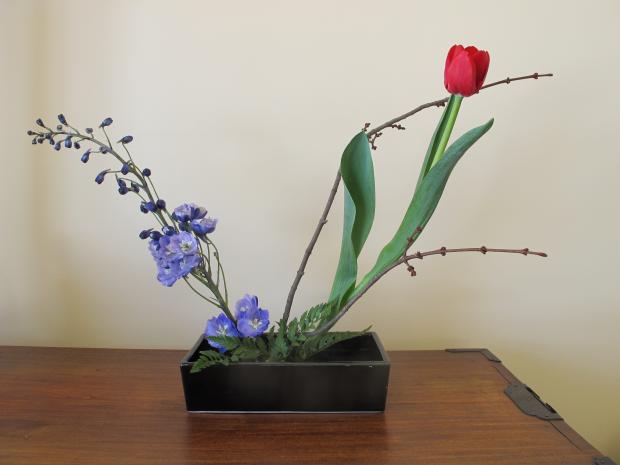
Ikebana

This week’s inspiring video: Ikebana
Having trouble reading this mail? View it in your browser. Not interested anymore? Unsubscribe
KarmaTube.org

Video of the Week

Jan 18, 2024
Ikebana

Ikebana

This short film "Ikebana" is an experimental documentary that reimagines the art of flower arranging. We tend to objectify plants and flowers when making arrangements, but this film invites the viewer to interact with the flowers as a way to enter into their world and be transformed in gentle and subtle ways. Learning that "In every arrangement there is line, color and intangible spirit" is just one step in to the world of Ikebana. Connecting different practices and perspectives through cinematic assemblage, the film witnesses plants as living, permeable vehicles that hold everyday memories and poetics.
Watch Video Now Share: Email Twitter FaceBook

Related KarmaTube Videos

Smile Big
Meditate
Live It Up
Serve All

A Teacher in Tokyo

I Will Be a Hummingbird

Caine’s Cardboard Arcade

Landfill Harmonic – Film Trailer

About KarmaTube:
KarmaTube is a collection of inspiring videos accompanied by simple actions every viewer can take. We invite you to get involved.
Other ServiceSpace Projects:

DailyGood // Conversations // iJourney // HelpOthers

MovedByLove // CF Sites // Karma Kitchen // More

Thank you for helping us spread the good. This newsletter now reaches 43,088 subscribers.

How Two Moms Founded An Adaptive Clothing Company

You’re receiving this email because you are a DailyGood subscriber.
Trouble Viewing? On a mobile? Just click here. Not interested anymore? Unsubscribe.
DailyGood News That Inspires

January 17, 2024

a project of ServiceSpace

How Two Moms Founded An Adaptive Clothing Company

True compassion means not only feeling another’s pain but also being moved to help relieve it.

– Daniel Goleman –

How Two Moms Founded An Adaptive Clothing Company

When Nicole Puzzo’s daughter, Stella, was dealing with her recovery from a double hip surgery in 2015, the challenge of dressing for her condition sparked an ingenious idea. Puzzo created a pair of pants that could be worn over Stella’s casts, transforming an everyday struggle into a practical solution. “Understanding how difficult it can be, and what a struggle it can be for millions of people, was very eye-opening,” said Joanne DiCamillo, Puzzo’s friend, who was inspired to join the effort. Together they launched befree, a company that creates adaptive clothing for people in similar situations to make their lives easier and bring a sense of normalcy during challenging times. The women’s work, which includes consulting with healthcare professionals to design for functionality, has been met with great positivity from users. Their pants, dubbed zipOns, have already had an enormous influence, transforming their creations made of necessity into agents of change in the world of adaptive fashion. { read more }

Be The Change

Make an extra effort to include everyone today.

COMMENT | RATE Email Twitter FaceBook

DailyGood is a volunteer-run initiative that delivers “good news” to 153,809 subscribers. There are many ways to help. To unsubscribe, click here.

Other ServiceSpace projects include:

KindSpring // KarmaTube // Conversations // Awakin // More

Effort Does Not Change The Person

Weekly excerpt to help us remember the sacred.

Awakin.org
Weekly Reading Jan 15, 2024

Effort Does Not Change The Person

–Anthony De Mello

Listen to Audio Translations RSVP for Awakin Circle
2629.jpgEffort may change the behavior but it does not change the person. Just think what kind of a mentality it betrays when you ask, ‘What must I do to get holiness?’ Isn’t it like asking, How much money must I spend to buy something? What sacrifice must I make? What discipline must I undertake? What meditation must I practice in order to get it? Think of a man who wants to win the love of a woman and attempts to improve his appearance or build his body or change his behavior and practice techniques to charm her.

You truly win the love of others not by the practice of techniques but by being a certain kind of person. And that is never achieved through effort and techniques. And so it is with spirituality and holiness. Not what you do is what brings it to you. This is not a commodity that one can buy or a prize that one can win. What matters is what you are, what you become.

Holiness is not an achievement; it is a grace. A grace called awareness, a grace called looking, observing, understanding. If you would only switch on the light of awareness and observe yourself and everything around you throughout the day, if you would see yourself reflected in the mirror of awareness the way you see your face reflected in a looking glass, that is, accurately, clearly, exactly as it is without the slightest distortion or addition, and if you observed this reflection without any judgment or condemnation, you would experience all sorts of marvelous changes coming about in you. Only you will not be in control of those changes, or be able to plan them in advance, or decide how and when they are to take place. It is this nonjudgmental awareness alone that heals and changes and makes one grow. But in its own way and at its own time.

What specifically are you to be aware of? Your reactions and your relationships. Each time you are in the presence of a person, any person, or with Nature or with any particular situation, you have all sorts of reactions, positive and negative. Study those reactions, observe what exactly they are and where they come from, without any sermonizing or guilt or even any desire, much less effort to change them. That is all that one needs for holiness to arise.

Will awareness bring you the holiness you so desire? Yes and no. The fact is you will never know. For true holiness, the type that is not achieved through techniques and efforts and repression, true holiness is completely unselfconscious. You wouldn’t have the slightest awareness of its existence in you. Besides you will not care, for even the ambition to be holy will have dropped as you live from moment to moment a life made full and happy and transparent through awareness. It is enough for you to be watchful and awake. For in this state your eyes will see the [truth]. Nothing else, but absolutely nothing else. Not security, not love, not belonging, not beauty, not power, not holiness — nothing else will matter anymore.

FB TW IN
How do you relate to the notion that effort does not change the person? Can you share a personal story of a time you were able to go beyond a transactional mindset of achievement and open into grace? What helps you be aware of your reactions and your relationships?

Add A Reflection

Awakin Archives

History

1,356

Awakin Readings

632

Awakin Interviews

99

Local Circles

Inspiring Links of the Week

Join: Interview with Stories of Soul Force
Good: How Philadelphia’s Faith Communities Held…
Watch: Being Black
Good: Local Jeweler Repairs Personal Treasures…
Read: 3 Steps to a Purposeful Year
Good: This Group In Ecuador Protects 10% Of The…
More: ServiceSpace News
ss_logo.png

About Awakin

Many moons ago, a couple friends got together to sit in silence for an hour, and share personal aha-moments. The ripples of that simple practice have now spread to millions over 20+ years, through local circles, weekly podcasts and more.

Join Community
To get involved, join ServiceSpace or subscribe to other newsletters.
Subscribe to this Awakin newsletter
Don’t want these emails?

Unsubscribe from this email

The Geometry Of Other People

You’re receiving this email because you are a DailyGood subscriber.
Trouble Viewing? On a mobile? Just click here. Not interested anymore? Unsubscribe.
DailyGood News That Inspires

January 15, 2024

a project of ServiceSpace

The Geometry Of Other People

People respond in accordance to how you relate to them.

– Nelson Mandela –

The Geometry Of Other People

“On the surface, the language we use to describe landscapes and buildings has little in common with the ways we think about our social worlds. A mountain range has little in common with a family; the design of a city is nothing like a colleague or so it seems. But if that is true, then why do we use spatial and architectural metaphors to describe so many of our human relationships?” asks postdoctoral scholar David Borkenhagen. “Good, trusted friends are described as close, regardless of their physical proximity, and a loved one on the other side of the world may feel nearer to you than someone you live with. You might have an inner circle of friends or feel left out from the circles of others. A colleague with higher status may seem to be above you and those with lower status may be below. There is even something architectural about the way we speak of setting boundaries or walling someone off. … Why do social relationships form distinct geometries in our minds?” In recent decades, research indicates that these metaphors are more than just figurative language. They actually may reveal something foundational about how we experience our social lives spatially — and that could hold profound possibilities. { read more }

Be The Change

Reflect on how your thoughts mirror your beliefs.

COMMENT | RATE Email Twitter FaceBook

DailyGood is a volunteer-run initiative that delivers “good news” to 153,850 subscribers. There are many ways to help. To unsubscribe, click here.

Other ServiceSpace projects include:

KindSpring // KarmaTube // Conversations // Awakin // More

Jan 19/20: Live from the Gandhi Ashram!

Incubator of compassionate action.

‌ ‌ ‌ ‌ ‌ ‌ ‌ ‌ ‌ ‌ ‌ ‌ ‌ ‌ ‌ ‌ ‌ ‌ ‌ ‌ ‌ ‌ ‌ ‌ ‌ ‌ ‌ ‌ ‌ ‌ ‌ ‌ ‌ ‌ ‌ ‌ ‌ ‌ ‌ ‌ ‌ ‌ ‌ ‌ ‌ ‌ ‌ ‌ ‌ ‌ ‌ ‌ ‌ ‌ ‌ ‌ ‌ ‌ ‌ ‌ ‌ ‌ ‌ ‌ ‌ ‌ ‌ ‌ ‌ ‌ ‌ ‌ ‌ ‌ ‌ ‌ ‌ ‌ ‌ ‌ ‌ ‌ ‌ ‌ ‌ ‌ ‌ ‌ ‌ ‌ ‌ ‌ ‌ ‌ ‌ ‌ ‌ ‌ ‌ ‌ ‌ ‌ ‌ ‌ ‌ ‌ ‌ ‌ ‌ ‌ ‌ ‌ ‌ ‌ ‌ ‌

ServiceSpace
View in Browser
Stories of Soul Force
Join ‘Live From Gandhi Ashram’ arrow_btn_white.png
Dear Friends,

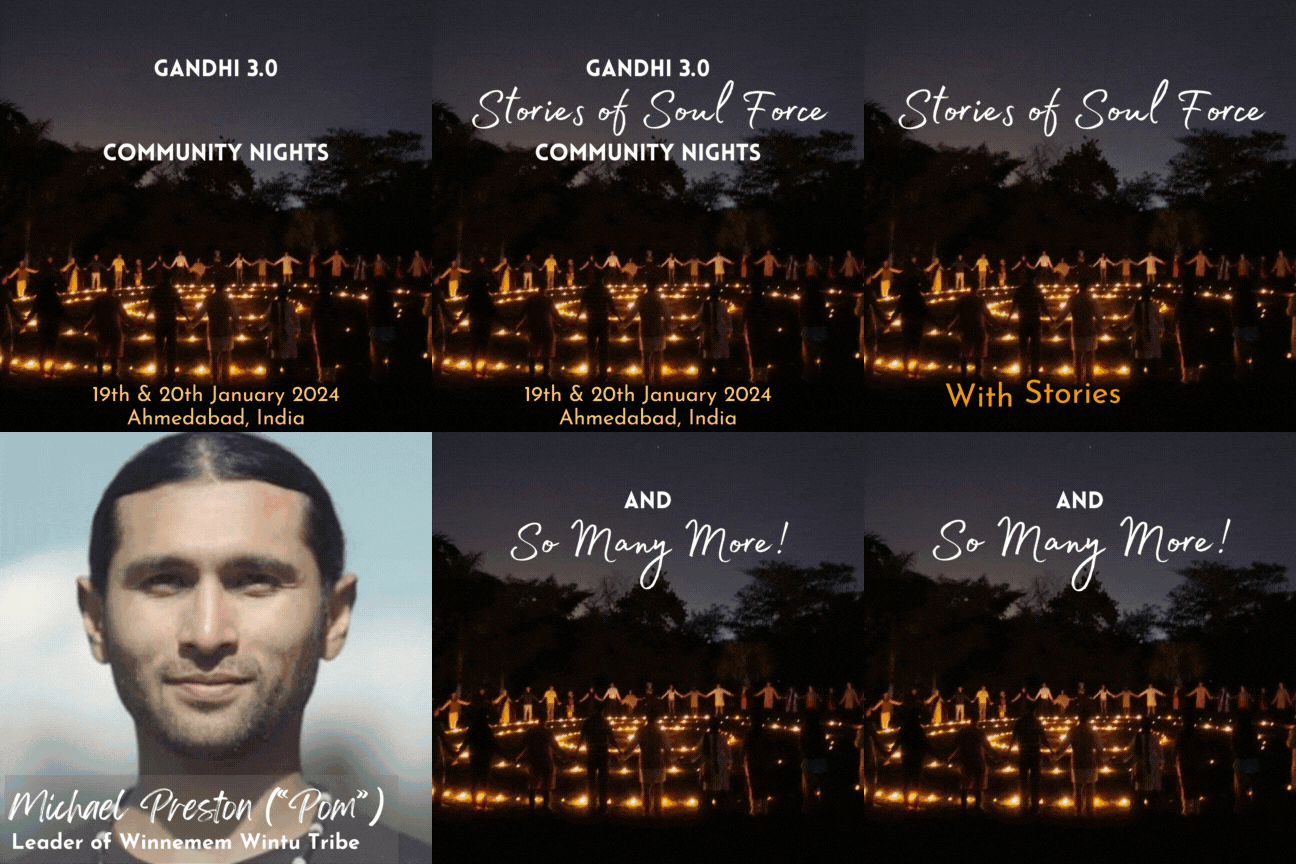
This week, noteworthy change-makers from more than 15+ countries are gathering at the Gandhi Ashram in India to collectively hold deep questions at the intersection of social change and inner transformation. Some of them are influencers whose work has impacted billions, while some are invisible ladders whose “deepcast” efforts are vividly felt by the world — and all of whom find themselves exploring different social operating systems in response to today’s poly-crises.

giphy.gif On Jan 19th and 20th, you are invited to join virtually, live from the Gandhi Ashram: RSVP For ‘Stories of Soul Force’ Evening

With stories from luminaries, songs by renowned artists, and performances by children at the Gandhi Ashram, we hope to do our bit to elevate the collective field for the planet — and would love for you to share your blessings as well.

Some of the retreat participants include … a Japanese investment banker who then spent years chanting in the Himalayas; a Haitian YouTuber with millions of followers who invites strangers on streets to “find their voice”; founder of America’s pioneering B Corp movement; ssp_65a0dc4e09e31.gif a young woman who worked on frontlines of conflict zones and then meditated for 2 years in a remote village of Nepal; tribal leader of an indigenous Native tribe that goes back centuries; spiritual teacher from Ireland who was drawn to Tiruvannamalai and spent 4 years without a single thought or dream, a mother in Colombia who has lovingly hosted 450 guests in her in the last year. Plus CEO of Ashoka Europe, a billionaire from China, a European artist who sang with Celine Dion, a sitarist who trained with Ravi Shankar, a shaper of Europe’s Inner Development Goals, chairman of Ygrene Clean Energy Fund, president of Dalai Lama’s Mind and Life Institute, venture capitalist from Vietnam, Ivy League’s youngest chaplain and many more!
To join us virtually: RSVP For ‘Stories of Soul Force’ Evening

Vinoba Bhave, Gandhi’s successor in India, shared an almost prophetic quote many decades ago:

“To progress, society doesn’t need ‘leaders’ anymore. This doesn’t mean that we won’t have great men amidst us. I think great men will come and they will be vital for progress of humanity, but they will be so great that they will refuse to take up this position of leadership. […] When we will all see our role in society as servants, we will all light up the sky together like countless stars on a dark night. Don’t think of society as the sky on a full moon night. The moon’s harsh light blinds us to the true and humble work of the stars. But on a moonless night, the true servants shine forth, as though they are connected invisibly in this vast and infinite cosmos.”

Thank you, all, for being stars.
Join ‘Stories of Soul Force’ arrow_btn_black.png
P.S. FEW GLOBAL TIDBITS …
Over the last few months, in-person ripples have amped up around the globe, with events from Sweden to London, Spain to Dubai, Japan to Harvard! In addition …

… some visuals from Vietnam, following a compelling 3-day retreat hosted by permaculture farmers.

… some moments from Austria after a moving retreat; plus, a candid interview on compassion and courage, right after Nipun woke up one morning in Vienna 🙂

… over last two months, we’ve been also been hosting many gatherings with thousands of people across India — but the most uncommon one was around AI + Ahimsa. 🙂

… some smiles from a recent retreat:

rz_ssp_65704b9c6b9c3.jpg

ServiceSpace is a unique incubator of volunteer-run projects that nurture a culture of generosity. We believe that small acts of service can nurture a profound inner transformation that sustains external impact. To get involved, you can subscribe to our newsletters or create an account and complete our 3-step process to volunteer.
Unsubscribe | Newsletter Archives | Upcoming Pods | Contact Us

Extraordinary Ordinary People

You’re receiving this email because you are a DailyGood subscriber.
Trouble Viewing? On a mobile? Just click here. Not interested anymore? Unsubscribe.
DailyGood News That Inspires

January 13, 2024

a project of ServiceSpace

Extraordinary Ordinary People

The greatest heroes are those who do their duty in the daily grind of domestic affairs whilst the world whirls as a maddening dreidel.

– Florence Nightingale –

Extraordinary Ordinary People

Around the world, an army of unsung heroes are upon us. These are not saints, but very human individuals, who, bolstered by their engaged spirituality, have surfaced deep contributions to the fabric of their communities, fields, and the world at large. “A lot of the reporting on religion is often negative. It’s about abuse, it’s about corruption, it’s about the decline of a particular institutional religion,” notes Donald Miller, Professor of Religion at University of Southern California (USC). Yet through Miller’s work around the globe, he met remarkable, down to earth exemplars of humanity whose diverse faiths supported their service in the world, even in the sobering context of genocide, poverty, and human rights. “I thought, wouldn’t it be interesting to try to document an alternative story about religion and the role of religion,” Miller states. And so the Spiritual Exemplars Project was born. Housed in USC’s Center for Religion and Civic Culture (CRCC), with support from the John Templeton Foundation, a team of researchers, academics, journalists, and filmmakers collectively highlighted 104 humanitarians from 42 countries and diverse faith traditions in articles, podcasts, and visual stories. Their stories unveil the embodied practice and living spark of, in Miller’s words, “purpose-driven human beings whose vision is enlivened through their spiritual practice.” { read more }

Be The Change

Experiment with doing inner and out work in equal parts today.

COMMENT | RATE Email Twitter FaceBook

DailyGood is a volunteer-run initiative that delivers “good news” to 154,002 subscribers. There are many ways to help. To unsubscribe, click here.

Other ServiceSpace projects include:

KindSpring // KarmaTube // Conversations // Awakin // More

Being Black

This week’s inspiring video: Being Black
Having trouble reading this mail? View it in your browser. Not interested anymore? Unsubscribe
KarmaTube.org

Video of the Week

Jan 11, 2024
Being Black

Being Black

Wayne’s father, who went to England from Jamaica in 1952 to help reconstruct the "father country," considered himself British. Wayne "grew up with the understanding that we had to be more British than the British". But for Wayne, living in the U.K. is a different story. He now thinks of himself as a Black British African Caribbean man since each one of those aspects make up his story, and all of them make him the man he is. Wayne finds the white privilege in Britain, and his constant need to be on guard about how others perceive him, to be exhausting. This compelling video ends with the question, "Isn’t it time for us to be more accepting of differences and embrace the beauty of others?"
Watch Video Now Share: Email Twitter FaceBook

Related KarmaTube Videos

Smile Big
Meditate
Live It Up
Serve All

Money and Life – Trailer

World Peace and Other 4th-Grade Achievements

The DNA Journey

Finding Love

About KarmaTube:
KarmaTube is a collection of inspiring videos accompanied by simple actions every viewer can take. We invite you to get involved.
Other ServiceSpace Projects:

DailyGood // Conversations // iJourney // HelpOthers

MovedByLove // CF Sites // Karma Kitchen // More

Thank you for helping us spread the good. This newsletter now reaches 43,140 subscribers.

Why Meeting Another’s Gaze Is So Powerful

You’re receiving this email because you are a DailyGood subscriber.
Trouble Viewing? On a mobile? Just click here. Not interested anymore? Unsubscribe.
DailyGood News That Inspires

January 9, 2024

a project of ServiceSpace

Why Meeting Another's Gaze Is So Powerful

Sight is a function of the eyes, but vision is a function of the heart.

– Myles Munroe –

Why Meeting Another’s Gaze Is So Powerful

You’ve done it at a job interview. When giving a presentation. While tucking in children at night. Or when sharing a meal with a loved one. The power of eye contact stretches far beyond cinematic romance. A growing body of research from psychologists and neuroscientists find that when we make eye contact with someone, our brains unconsciously kick into overdrive. During this seemingly simple human interaction, our eyes commandeer our attention making us less aware of everything else, BBC Future reports. Direct gaze dives into brain functionality recognizing psychological, emotional and social consciousness in the process. It triggers aspects of social cognition. Even, one might argue, it’s a momentary melding of the self and the other. “You’ve doubtless had the experience when, across a noisy, crowded room, you lock gazes with another person. It’s almost like a scene out of the movies,” writes Christian Jarrett. Apparently, when we meet another’s gaze, there’s quite literally a lot more to it than what meets the eye. { read more }

Be The Change

Notice when you do or don’t make eye contact, and how that influences your exchange or communication with others.

COMMENT | RATE Email Twitter FaceBook

DailyGood is a volunteer-run initiative that delivers “good news” to 153,997 subscribers. There are many ways to help. To unsubscribe, click here.

Other ServiceSpace projects include:

KindSpring // KarmaTube // Conversations // Awakin // More

An Awe Walk

Weekly excerpt to help us remember the sacred.

Awakin.org
Weekly Reading Jan 8, 2024

An Awe Walk

–Dacher Keltner

Listen to Audio Translations RSVP for Awakin Circle
2598.jpgWhat gives you a sense of awe? That word, awe—the feeling of being in the presence of something vast that transcends your understanding of the world—is often associated with the extraordinary. You might imagine standing next to a 350-foot-tall tree or on a wide-open plain with a storm approaching, or hearing an electric guitar fill the space of an arena, or holding the tiny finger of a newborn baby. Awe blows us away: It reminds us that there are forces bigger than ourselves, and it reveals that our current knowledge is not up to the task of making sense of what we have encountered.

But you don’t need remarkable circumstances to encounter awe. When my colleagues and I asked research participants to track experiences of awe in a daily diary, we found, to our surprise, that people felt it a bit more than two times a week on average. And they found it in the ordinary: a friend’s generosity, a leafy tree’s play of light and shadow on a sidewalk, a song that transported them back to a first love.

We need that everyday awe, even when it’s discovered in the humblest places. A survey of relevant studies suggest that a brief dose of awe can reduce stress, decrease inflammation, and benefit the cardiovascular system. Luckily, we don’t need to wait until we stumble upon it; we can seek it out. Awe is all around us. We just need to know where to look for it.

Along with Virginia Sturm, a UC San Francisco neuroscientist, I studied the effects of an “awe walk.” One group of subjects took a weekly walk for eight weeks; the other group did the same but with some instructions: Tap into your childlike sense of wonder, imagining you’re seeing everything for the first time. Take a moment during each walk to notice the vastness of things—when looking at a panoramic view, for example, or at the detail of a flower. And go somewhere new, or try to recognize new features of the same old place. All of the participants reported on their happiness, anxiety, and depression and took selfies during their walks.

We found that the awe-walkers felt more awe with each passing week. You might have thought that their capacity for awe would start to decrease: This is known as the law of hedonic adaptation, that certain pleasures or accomplishments—a new job, a bigger apartment—start to lose some of their thrill over time. But the more we practice awe, it seems, the richer it gets.

We also found evidence that the self can extend into the environment. In the awe-walk condition, people’s selfies increasingly included less of the self. Over time, the subjects drifted off to the side, showing more of the outside environment—a street corner in San Francisco, the trees, the rocks around the Pacific Ocean. Over the course of our study, awe-walkers reported feeling less daily distress and more prosocial emotions such as compassion and amusement.

Nearly three years into a pandemic that’s made many of us feel powerless and small, seeking out the immense and mysterious might not seem appealing. But often, engaging with what’s overwhelming can put things in perspective. Staring up at a starry sky; looking at a sculpture that makes you shudder; listening to a medley of instruments joining into one complex, spine-tingling melody—those experiences remind us that we’re part of something that will exist long after us. We are well served by opening ourselves to awe wherever we can find it, even if only for a moment or two.

FB TW IN
How do you relate to the notion that practicing awe expands our capacity to be in awe? Can you share a personal story of a time you found awe in the mundane? What helps you be in awe?

Add A Reflection

Awakin Archives

History

1,355

Awakin Readings

632

Awakin Interviews

99

Local Circles

Inspiring Links of the Week

Join: Laddership
Good: Nunavut Dad Who Donated Kidney To Son Says It’s…
Watch: The Secret to Living Longer May Be Your Social Life
Good: In A British Town, A New Way Of Caring For…
Read: 66 Good News Stories You Didn’t Hear About in 2023
Good: This Arizona Thrift Store Is Filled With School…
More: ServiceSpace News
ss_logo.png

About Awakin

Many moons ago, a couple friends got together to sit in silence for an hour, and share personal aha-moments. The ripples of that simple practice have now spread to millions over 20+ years, through local circles, weekly podcasts and more.

Join Community
To get involved, join ServiceSpace or subscribe to other newsletters.
Subscribe to this Awakin newsletter
Don’t want these emails?

Unsubscribe from this email

3 Steps to a Purposeful Year

You’re receiving this email because you are a DailyGood subscriber.
Trouble Viewing? On a mobile? Just click here. Not interested anymore? Unsubscribe.
DailyGood News That Inspires

January 8, 2024

a project of ServiceSpace

3 Steps to a Purposeful Year

The great solution to all human problems is individual inner transformation.

– Vernon Howard –

3 Steps to a Purposeful Year

The beginning of the year often marks the possibility of fresh beginnings. We make resolutions to help things to change for the better. It may sound something like: “I don’t love my job or where I live, so I’m going to make some changes.” “As a coach, I’m happy when my people are ready for change,” writes author Christine Carter. “But the best first move usually isn’t an outer change to our circumstances to a new job or city, for example. Pursuing achievements that improve our social status and bring us wealth or fame can be tempting but people who prioritize those things tend to have lower well-being. Instead, the best first move is almost always inner work. It’s identifying a vision for the coming year that animates our best selves. When we align our aspirations with our intrinsic interests and values, we tend to increase our well-being and the odds of achieving our goals. But that task can feel daunting!” Carter goes on to outline three ways to get started: Begin from your strengths rather than your weaknesses, Think about what makes you feel at peace, and set an aspiration for how you’d like to live. { read more }

Be The Change

Try one of the article’s tips as you embark into the new year: start with a strength, reflect on what brings you peace, or take a step back and consider who you truly aspire to be.

COMMENT | RATE Email Twitter FaceBook

DailyGood is a volunteer-run initiative that delivers “good news” to 154,014 subscribers. There are many ways to help. To unsubscribe, click here.

Other ServiceSpace projects include:

KindSpring // KarmaTube // Conversations // Awakin // More

Design a site like this with WordPress.com
Get started