In association with hhdlstudycirclemontreal.org

Archive for July, 2020

Empathy vs Sympathy

You’re receiving this email because you are a DailyGood subscriber.
Trouble Viewing? On a mobile? Just click here. Not interested anymore? Unsubscribe.
DailyGood News That Inspires

July 10, 2020

a project of ServiceSpace

Empathy vs Sympathy

Empathy is connecting with the emotion that someone is experiencing, not the event or the circumstance.

– Brene Brown –

Empathy vs Sympathy

Empathy and sympathy are not just two different approaches to confronting the emotional challenges of others; they are diametrically opposite responses in many important ways. Sympathy places another’s problems at a distance from us, places us in a position of superiority, and “drives separation”, says the film’s narrator, Dr. Bren Brown. Empathy, on the other hand, requires that one internalize the feelings of another. That shared experience drives interpersonal connection, she says. “What makes things better is connection.” { read more }

Be The Change

The next time you find yourself feeling sorry for someone, try to shift your reaction from sympathy to empathy.

COMMENT | RATE Email Twitter FaceBook

Related Good News

Smile Big
Love Freely
Meditate
Give Back

111 Trees

Guide to Well-Being During Coronavirus

This is Me at 68: Elders Reflect During Crisis

How to Be Yourself

Smile Big
Love Freely
Meditate
Give Back

How to Unhijack Your Mind from Your Phone

16 Teachings from COVID-19

Orion’s 25 Most-Read Articles of the Decade

A Tribute to Mary Oliver

DailyGood is a volunteer-run initiative that delivers “good news” to 247,033 subscribers. There are many ways to help. To unsubscribe, click here.

Other ServiceSpace projects include:

KindSpring // KarmaTube // Conversations // Awakin // More

Empathy vs. Sympathy

This week’s inspiring video: Empathy vs. Sympathy
Having trouble reading this mail? View it in your browser. Not interested anymore? Unsubscribe
KarmaTube.org

Video of the Week

Jul 09, 2020
Empathy vs. Sympathy

Empathy vs. Sympathy

Empathy and sympathy are not just two different approaches to confronting the emotional challenges of others; they are diametrically opposite responses in many important ways. Sympathy places another’s problems at a distance from us, places us in a position of superiority, and "drives separation", says the film’s narrator, Dr. Brené Brown. Empathy, on the other hand, requires that one internalize the feelings of another. That shared experience drives interpersonal connection, she says. "What makes things better is connection."
Watch Video Now Share: Email Twitter FaceBook

Related KarmaTube Videos

Smile Big
Meditate
Live It Up
Serve All

I Trust You

Caring for Each Other

The Fun Theory: Piano Stairs

The Overview Effect

About KarmaTube:
KarmaTube is a collection of inspiring videos accompanied by simple actions every viewer can take. We invite you to get involved.
Other ServiceSpace Projects:

DailyGood // Conversations // iJourney // HelpOthers

MovedByLove // CF Sites // Karma Kitchen // More

Thank you for helping us spread the good. This newsletter now reaches 69,461 subscribers.

We Have to Talk: A Checklist for Difficult Conversations

You’re receiving this email because you are a DailyGood subscriber.
Trouble Viewing? On a mobile? Just click here. Not interested anymore? Unsubscribe.
DailyGood News That Inspires

July 9, 2020

a project of ServiceSpace

We Have to Talk: A Checklist for Difficult Conversations

Conflict can be seen as a gift of energy, in which neither side loses and a new dance is created.

– Thomas Crum –

We Have to Talk: A Checklist for Difficult Conversations

“There are dozens of books on the topic of difficult, crucial, challenging, fierce, important conversations. Those times when you know you should talk to someone, but you don’t. Maybe you’ve tried and it went badly. Or maybe you fear that talking will only make the situation worse. Still, you feel stuck, and you’d like to free up that stuck energy for more useful purposes.” Judy Ringer is a conflict resolution trainer, and a black belt in Aikido. Here she offers a checklist for difficult conversations, along with best practice strategies, tips and additional resources. { read more }

Be The Change

Experiment with one or more of the best practices in Ringer’s post. For more inspiration, check out this short talk on “5 Ways to Listen Better.” { more }

COMMENT | RATE Email Twitter FaceBook

Related Good News

Smile Big
Love Freely
Meditate
Give Back

111 Trees

One Teacher’s Brilliant response to Columbine

Guide to Well-Being During Coronavirus

This is Me at 68: Elders Reflect During Crisis

Smile Big
Love Freely
Meditate
Give Back

I Wish My Teacher Knew…

5 Core Practices for More Meaningful Conversations

The Monkey and the River

One Love

DailyGood is a volunteer-run initiative that delivers “good news” to 247,030 subscribers. There are many ways to help. To unsubscribe, click here.

Other ServiceSpace projects include:

KindSpring // KarmaTube // Conversations // Awakin // More

Happy Birthday Pema!!

Join us in wishing Pema a Happy Birthday!!
Please join us in wishing
Pema a very Happy Birthday on July 14th!!
Dear friends,

On behalf of Pema and The Pema Chödrön Foundation, we send our very best wishes for your health and wellbeing during these challenging times. We hope that you, and all of your loved ones, are able to take good care of yourselves and remain safe as we navigate so many unknowns together.

In honor of Pema’s birthday, the Pema Chödrön Foundation invites you to donate to a project very dear to Pema’s heart, Homeboy Industries. For over 30 years, Homeboy Industries has proudly and compassionately stood with and served the most marginalized among us. Homeboy is firmly rooted in the belief that hope, training and support to formerly gang-involved and previously incarcerated men and women provides the foundational healing necessary for sustained change. Through their innovative 18-month program model, participants receive services such as Tattoo Removal, Mental Health Services, GED preparation, and job training – all with the singular goal of healing the cycle of violence and restoring lives.

Please read more about Homeboy Industries and consider making a donation – here.

Pema’s Omega Institute retreat (Sept 11-13) will be live streamed!
Due to the pandemic, Pema’s weekend teachings scheduled for September 11-13, 2020 at Omega has been changed to a live online retreat: Welcoming the Unwelcome.

“Perhaps never before has so much of our lives changed so dramatically and so quickly. It seems everything has been upended, leaving us no solid ground beneath our feet. Ancient Buddhist wisdom can help us get to the heart of our ensuing stress, anger, grief, and fear. And when taught by a contemporary master, it’s just what the world needs today.” ~Omega Institute

The virtual weekend includes talks and question and answer sessions with Pema. Tim Olmsted will guide us in meditation practices that assist us in applying the weekend teachings to our everyday lives.

For more information and registration details visit Omega Institute here. Early bird pricing is available through 8/8/20!

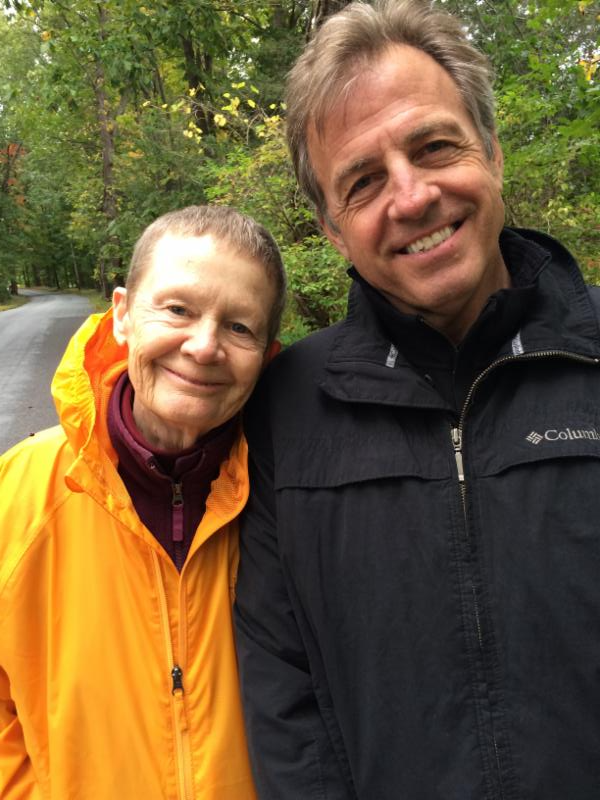
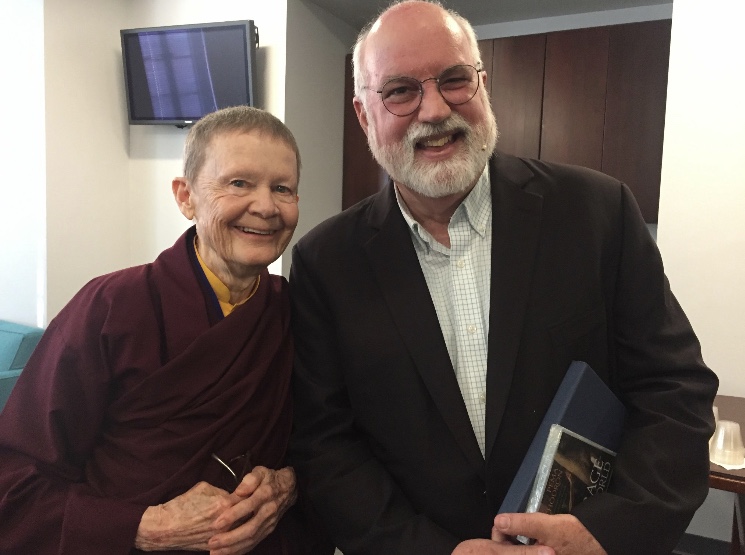
Pema with Father Greg Boyle, founder of Homeboy Industries
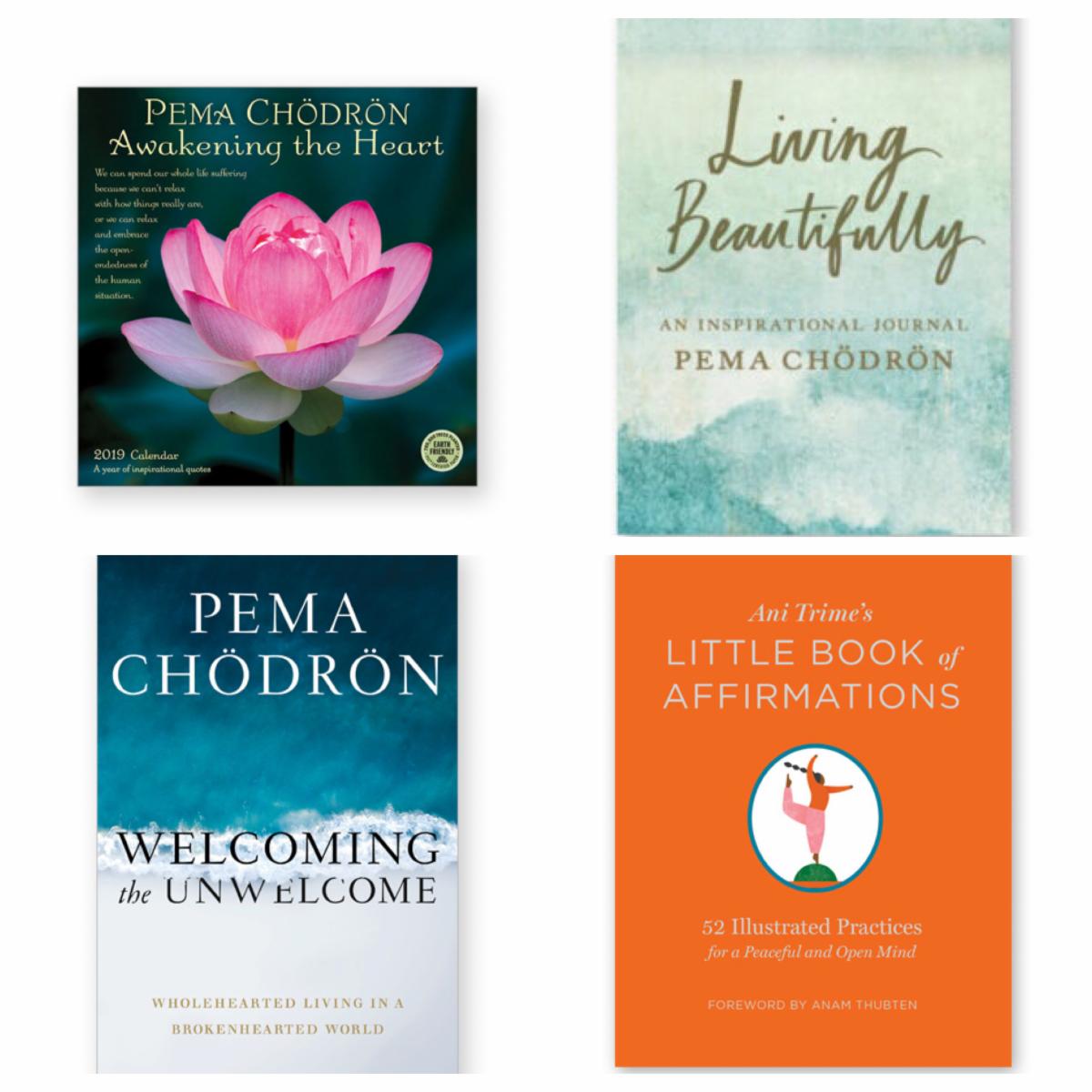
Visit our online bookstore here to support Pema’s work. Shipping is free in the US!
Pema Chödrön Foundation pemachodronfoundation.org
Facebook Twitter Instagram
Pema Chodron Foundation | PO Box 770630, Steamboat Springs, CO 80477
news

Robin Wall Kimmerer on the Language of Animacy

You’re receiving this email because you are a DailyGood subscriber.
Trouble Viewing? On a mobile? Just click here. Not interested anymore? Unsubscribe.
DailyGood News That Inspires

July 8, 2020

a project of ServiceSpace

Robin Wall Kimmerer on the Language of Animacy

Knowing that you love the earth changes you, activates you to defend and protect and celebrate. But when you feel that the earth loves you in return, that feeling transforms the relationship from a one-way street into a sacred bond.

– Robin Wall Kimmerer –

Robin Wall Kimmerer on the Language of Animacy

In the English language, we reserve the pronouns of personhood for humans– he, she, they–and not for animals, plants, and landscapes. Yet in many of Americas indigenous languages, such barriers are dissolved, and so, too, is the sense of distance between human and nonhuman. Orion editor Helen Whybrow speaks with Robin Wall Kimmerer, a speaker of Potawatomi and an enrolled member in the Citizen Band Potawatomi, about how to find a language that affirms our kinship with the natural world. { read more }

Be The Change

Do you feel a sense of a sacred bond with the earth? If yes, take time to write a little reflection about it to share with close friends and family.

COMMENT | RATE Email Twitter FaceBook

Related Good News

Smile Big
Love Freely
Meditate
Give Back

One Teacher’s Brilliant response to Columbine

Guide to Well-Being During Coronavirus

How to Strengthen Your Inner Shield

How to Unhijack Your Mind from Your Phone

Smile Big
Love Freely
Meditate
Give Back

5 Core Practices for More Meaningful Conversations

Orion’s 25 Most-Read Articles of the Decade

A Tribute to Mary Oliver

Love in the Time of Coronavirus

DailyGood is a volunteer-run initiative that delivers “good news” to 247,032 subscribers. There are many ways to help. To unsubscribe, click here.

Other ServiceSpace projects include:

KindSpring // KarmaTube // Conversations // Awakin // More

Spotlight On Kindness: Forgiveness

We might think that forgiveness means accepting the harm that happened to us. I think that it’s actually recognizing that harm occurred, but not accepting that it was okay that it happened. It’s not excusing the behavior or justifying it. Forgiveness is letting go of the resentment, so the past doesn’t have a hold on you. It’s choosing to rise above it. –Guri

View In Browser
Weekly KindSpring Newsletter
Home | Contact
Spotlight On
Kindness
A Weekly Offering
Love
Forgiveness does not change the past, but it does enlarge the future. –Paul Boose
Smile
Editor’s Note: We might think that forgiveness means accepting the harm that happened to us. I think that it’s actually recognizing that harm occurred, but not accepting that it was okay that it happened. It’s not excusing the behavior or justifying it. Forgiveness is letting go of the resentment, so the past doesn’t have a hold on you. It’s choosing to rise above it. –Guri
Kindness Rocks
Kindness In the News
Author of, “Reawakening: Return of Lightness and Peace after My Daughter’s Murder,” talks about her compelling journey to forgiveness, as well as helping the perpetrator forgive himself and heal.
Read More
Kindness is Contagious.
From Our Members
A KindSpringer shares her own experience of forgiveness when something hurtful happens. She reflects on what forgiveness truly means to her, and how “to release the poison that contaminates you.”
Read More
Inspiring Video of the Week
Serve all
Play
Everything Is a Present
Hugs Anthony Robbins interviews Holocaust survivor Alice Herz Sommer, who is 108. She lovingly talks about what helped her through the concentration camp and life. Her incredible story.
In Giving, We Receive
In other news …
The secret to happiness? Stanford professor says it’s forgiveness. Dr. Fred Luskin, the author of “Forgive for Good: A Proven Prescription for Health and Happiness,” explains why in this thought-provoking ARTICLE.
FB Twitter
KindSpring is a 100% volunteer-run platform that allows everyday people around the world to connect and deepen in the spirit of kindness. Current subscribers: 146,765

Having trouble reading this? View it in your browser. Not interested anymore? Unsubscribe.

Everything You Think You Know About Addiction Is Wrong

You’re receiving this email because you are a DailyGood subscriber.
Trouble Viewing? On a mobile? Just click here. Not interested anymore? Unsubscribe.
DailyGood News That Inspires

July 7, 2020

a project of ServiceSpace

Everything You Think You Know About Addiction Is Wrong

Addictions always originate in pain, whether felt openly or hidden in the unconscious.

– Gabor Mate –

Everything You Think You Know About Addiction Is Wrong

What really causes addiction — to everything from cocaine to smart-phones? And how can we overcome it? Johann Hari has seen our current methods fail firsthand, as he has watched loved ones struggle to manage their addictions. He started to wonder why we treat addicts the way we do — and if there might be a better way. As he shares in this deeply personal talk, his questions took him around the world, and unearthed some surprising and hopeful ways of thinking about an age-old problem. { read more }

Be The Change

For more inspiration, join this Saturday’s Awakin Call with Stephen Loyd, “Compassion & Science in Appalachia: Healing Opioid and Other Addictions”. More details and RSVP info here. { more }

COMMENT | RATE Email Twitter FaceBook

Related Good News

Smile Big
Love Freely
Meditate
Give Back

What It Means to Hold Space & 8 Tips to Do it Well

One Teacher’s Brilliant response to Columbine

Being Resilient During Coronavirus

This is Me at 68: Elders Reflect During Crisis

Smile Big
Love Freely
Meditate
Give Back

Mary Oliver: Instructions for Living A Life

5 Core Practices for More Meaningful Conversations

16 Teachings from COVID-19

Three Methods for Working with Chaos

DailyGood is a volunteer-run initiative that delivers “good news” to 247,049 subscribers. There are many ways to help. To unsubscribe, click here.

Other ServiceSpace projects include:

KindSpring // KarmaTube // Conversations // Awakin // More

Awakin Weekly: The Positivity Ratio

Email not displaying correctly? View it in your browser.
InnerNet Weekly: Inspirations from ServiceSpace.org
The Positivity Ratio
by Barbara Fredrickson

[Listen to Audio!]

2430.jpgImagine you’re a water lily. It’s early dawn and your petals are closed in around your face. If you can see anything at all, it’s just a little spot of sunlight. But as the sun rises in the sky, things begin to change. Your blinders around your face begin to open and your world quite literally expands. You can see more. Your world is larger.

Just as the warmth of sunlight opens flowers, the warmth of positivity opens our minds and hearts. It changes our visual perspective at a really basic level, along with our ability to see our common humanity with others.

We know this because we’ve done studies that show this. […] Researchers find that when you induce positive emotion, people’s brains can’t help but pick up on the context, even when they were told to ignore it. When people are feeling neutral or negative emotions, they don’t see the context at all.

This suggests that when people experience positive emotions, they have a wider awareness — which may explain why people have a better memory for peripheral details when they’re remembering episodes that were positive. Positive emotions quite literally help us see more possibilities.

But how much positivity do we need in our lives to reap these benefits — how much is enough? Our research has concluded that a ratio of at least three-to-one — three positive emotions for every negative emotion — serves as a tipping point, which will help determine whether you languish in life, barely holding on, or flourish, living a life ripe with possibility, remarkably resilient to hard times.

It’s important to note that the ratio is not three-to-zero. This is not about eliminating all negative emotions. Part of this prescription is the idea that negative emotions are actually necessary.

Consider a sailboat metaphor. Rising from the sailboat is the enormous mast, which allows the sail to catch the wind and give the boat momentum. But below the waterline is the keel, which can weigh tons. You can see the mast as positivity and the keel down below as negativity. If you sail, you know that even though it’s the mast that holds the sail, you can’t sail without the keel; the boat would just drift around or tip over. The negativity, the keel, is what allows the boat to stay on course and manageable.

When I once shared this metaphor with an audience, a gentleman said, "You know, when the keel matters most is when you’re sailing upwind, when you’re facing difficulty." Experiencing and expressing negative emotions is really part of the process for flourishing, even — or especially — during hard times, as they help us stay in touch with the reality of the difficulties we’re facing. […]

There’s a Sufi proverb: There wouldn’t be such a thing as counterfeit gold if there were no real gold somewhere. So how can we tap into those genuine, heartfelt positive emotions without grasping for the counterfeit gold?

About the Author: Barbara Fredrickson is the Kenan Distinguished Professor at the University of North Carolina, Chapel Hill. She is also the author of Positivity. Excerpt above from this article.

Share the Wisdom:
Email Twitter FaceBook
Latest Community Insights New!
The Positivity Ratio
How do you relate to the notion that negative emotions help us ‘stay in touch with the reality of the difficulties we’re facing’? Can you share a personal story of a time positive emotions opened up more context and possibilities for you? What helps you tap into genuine, heartfelt positive emotions without grasping for the counterfeit gold?
Jagdish P Dave wrote: I have learned from my personal experience that life is not a straight line. It has curves, twists and turns. I have experienced negative emotions such as fear, depression and anger. They are not easy…
David Doane wrote: When light increases and when blinders open, vision expands. Opening one’s mind and heart, one sees differently. Context seen is undoubtedly affected by what one is feeling. Emotions called positi…
Share/Read Your Reflections
Awakin Circles:
Many years ago, a couple friends got together to sit in silence for an hour, and share personal aha-moments. That birthed this newsletter, and rippled out as Awakin Circles in 80+ living rooms around the globe. To join in Santa Clara this week, RSVP online.

RSVP For Wednesday

Some Good News

A Pandemic Poem-Prayer
Advice from 100-Year-Olds
How to Support Antiracism in Yourself & in the World

Video of the Week

Advice from 100 Year-Olds

Kindness Stories

Global call with Stephen Loyd!

473.jpgJoin us for a conference call this Saturday, with a global group of ServiceSpace friends and our insightful guest speaker. Join the Forest Call >>

About
Back in 1997, one person started sending this simple “meditation reminder” to a few friends. Soon after, “Wednesdays” started, ServiceSpace blossomed, and the humble experiments of service took a life of its own. If you’d like to start an Awakin gathering in your area, we’d be happy to help you get started.

Forward to a Friend

Awakin Weekly delivers weekly inspiration to its 94,228 subscribers. We never spam or host any advertising. And you can unsubscribe anytime, within seconds.

On our website, you can view 17+ year archive of these readings. For broader context, visit our umbrella organization: ServiceSpace.org.

World At Dawn

You’re receiving this email because you are a DailyGood subscriber.
Trouble Viewing? On a mobile? Just click here. Not interested anymore? Unsubscribe.
DailyGood News That Inspires

July 6, 2020

a project of ServiceSpace

World At Dawn

This grand show is eternal. It is always sunrise somewhere; the dew is never dried all at once; a shower is forever falling; vapor is ever rising. Eternal sunrise, eternal dawn and gloaming, on sea and continents and islands, each in its turn, as the round earth rolls.

– John Muir –

World At Dawn

“At dawn, the world rises out of darkness, slowly, sense-grain by grain, as if from sleep. Life becomes visible once again. “When it is dark, it seems to me as if I were dying, and I can’t think anymore,” Claude Monet once lamented. More light! Goethe begged from his deathbed. Dawn is the wellspring of more light, the origin of our first to last days as we roll in space, over 6.684 billion of us in one global petri dish, shot through with sunlight, in our cells, in our minds, in our myriad metaphors of rebirth, in all the extensions to our senses that we create to enlighten our days and navigate our nights.” Acclaimed author and poet Diane Ackerman shares more. { read more }

Be The Change

Keep a tryst with dawn this week.

COMMENT | RATE Email Twitter FaceBook
Related Good News

Smile Big
Love Freely
Meditate
Give Back

111 Trees

Guide to Well-Being During Coronavirus

Being Resilient During Coronavirus

How to Be Yourself

Smile Big
Love Freely
Meditate
Give Back

How to Strengthen Your Inner Shield

On Being Alone

The Joy of Being a Woman in Her Seventies

A Tribute to Mary Oliver

DailyGood is a volunteer-run initiative that delivers “good news” to 247,062 subscribers. There are many ways to help. To unsubscribe, click here.

Other ServiceSpace projects include:

KindSpring // KarmaTube // Conversations // Awakin // More

Advice from 100-Year-Olds

You’re receiving this email because you are a DailyGood subscriber.
Trouble Viewing? On a mobile? Just click here. Not interested anymore? Unsubscribe.
DailyGood News That Inspires

July 5, 2020

a project of ServiceSpace

Advice from 100-Year-Olds

To know how to grow old is the master work of wisdom, and one of the most difficult chapters in the great art of living.

– Henri Frederic Amiel –

Advice from 100-Year-Olds

Three centenarians were asked the secret of their longevity. With simple grace and wisdom they give us an insight into the optimism and humor that sustain them. as they each share what is most important to them. They exemplify the value of listening to and learning from the lessons of one’s own life as they remind us to “keep right on to the end of the road”.
{ read more }

Be The Change

Send a thank you today to an elder in your own life who has given you support and inspiration.

COMMENT | RATE Email Twitter FaceBook
Related Good News

Smile Big
Love Freely
Meditate
Give Back

111 Trees

What It Means to Hold Space & 8 Tips to Do it Well

Why Singing in a Choir Makes You Happier

To Keep Company With Oneself

Smile Big
Love Freely
Meditate
Give Back

How to Unhijack Your Mind from Your Phone

5 Core Practices for More Meaningful Conversations

Love in the Time of Coronavirus

Three Methods for Working with Chaos

DailyGood is a volunteer-run initiative that delivers “good news” to 247,051 subscribers. There are many ways to help. To unsubscribe, click here.

Other ServiceSpace projects include:

KindSpring // KarmaTube // Conversations // Awakin // More

Design a site like this with WordPress.com
Get started